
Today we go deep inside Cambodia to explain exactly how power works -- and how these networks generated the billions of dirty cash now sparking an international manhunt for Benjamin Mauerberger.
Welcome to Whale Hunting, where we follow the money from Southeast Asian scam centers to Manhattan penthouses, exposing the criminal networks that cost Americans billions each year.
Today we have another special essay on Cambodia’s underworld networks by Jacob Sims, a transnational crime expert and Harvard Fellow, who has been working with Whale Hunting to break this story open.
While Thai and Western enablers helped move billions of dollars of dirty money, none of this could have happened without Yim Leak, one of Cambodia's most powerful princelings.
Jacob has been investigating these networks for years, and today he's taking us deep inside Cambodia to explain how power works – and how the gushers of cash are produced.
Tom and Bradley
Get the full story—free with your email.
This story is open to all who subscribe. But investigations like this aren’t cheap. If you believe accountability journalism matters, consider upgrading to a paid subscription—or sending a one-time boost. Every contribution directly funds more reporting like this.
Have a tip? Reach us at:
📩 whalehunting@projectbrazen.com
📧 projectbrazen@protonmail.com
🔒 Secure contact details here.
We protect our sources.
This article is part of Whale Hunting, our ongoing investigation into the money laundering network connecting Southeast Asian scam centers to Thailand's political elite.
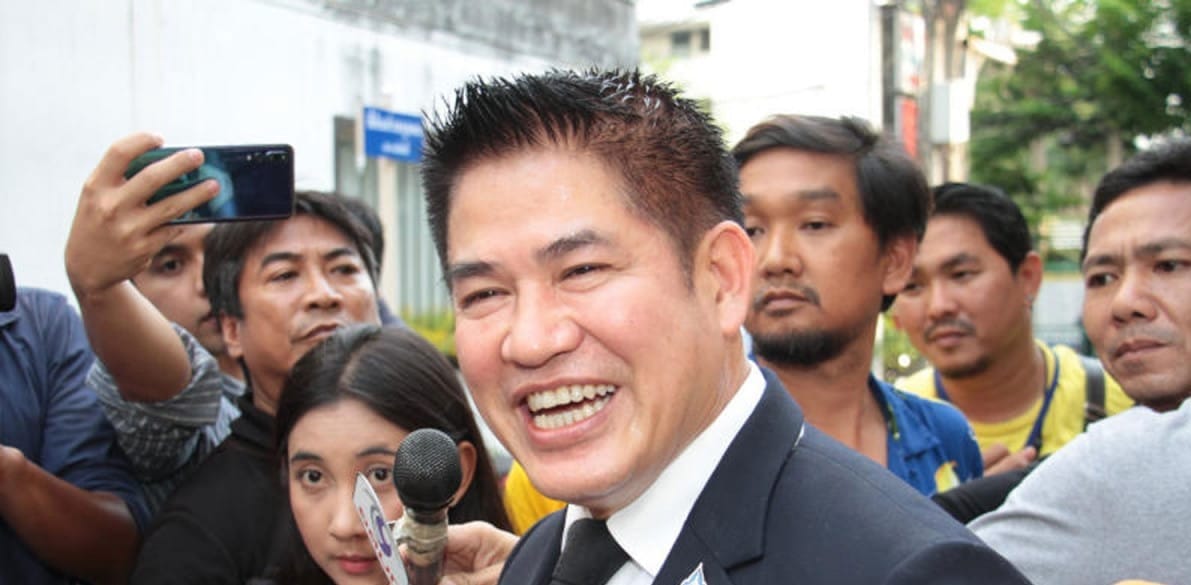
Within days of our investigation linking the Mauerberger laundering network to Yim Leak’s Cambodian scamming portfolio, Thailand’s Deputy Prime Minister Thammanat Prompao began threatening to weaponize the state. He floated arrest warrants, INTERPOL Red Notices, and billion-baht SLAPP suits against anyone who dared expose his ties to Benjamin Mauerberger—the same South African fixer whose shadowy wealth had already stretched from Phnom Penh to Manhattan.
The irony is blunt: a convicted heroin trafficker at the apex of Thai politics threatening reporters and researchers for tracing a cross-border trafficking and money-laundering enterprise. In the authoritarian economies of mainland Southeast Asia, the law has long been an instrument of coercion; Thammanat was merely playing from the same book that Hun Manet’s cousin (Hun To), business partner (Ly Yong Phat), and cabinet-level advisor (Chen Zhi) use when they threaten or sue Al Jazeera, The Australian, New York Times, or The Diplomat for reporting the truth.
But what made these threats different was their timing. They came only after Cambodia entered the frame—after the public could see how the Thai political elite’s offshore money was entangled with Cambodia’s state-abetted scam compounds and human-trafficking empire. For Bangkok’s nationalists, the revelation could be explosive: tens of thousands of Thai citizens enslaved in Cambodian compounds; hundreds of thousands defrauded; and a major conflict already in motion at the border. So, for Thammanat and Mauerberger, exposure was not just reputational—it was existential.
As for Yim Leak, Mauerberger’s silent partner, whose wealth and marriage made him indispensable to this cross-border cabal, that same convergence also now marks his greatest liability. In this installment, we dig deeper into Leak’s prolific ties to the scam economy – and into how Cambodia’s kleptocratic dynasty has given this transnational laundering syndicate its economic firepower.

By the time Bangkok gossip caught up, Yim Leak was gone. The Aman Residences penthouse—once a symbol of new-money confidence on the city’s skyline—now sits empty. Staff were told to pack the art and the watches; boxes were loaded for Phnom Penh. The Gulfstream G650 that carried Leak and his Thai wife, Visnie Thepcharoen, through Europe, the Maldives, Manhattan, and Phuket—was airborne again and headed east across a tense border.
What does a man who is “untouchable” fear?
The answer isn’t in the cars (the Koenigsegg Regera, the LaFerrari) or the watches (the Tourbillon Skull) or even the apartments. It’s certainly not in the prospect of international reputational damage. It’s his network.
Yim Leak did not build a fortune in the traditional sense; he was drafted upward into a dynasty, then used his seat at the table to bridge two murky worlds—Cambodia’s unipolar dynastic political order and Thailand’s global capital and attendant opportunities to rinse blood money clean. When the politics shifted, the whole house of cards risked crashing down.
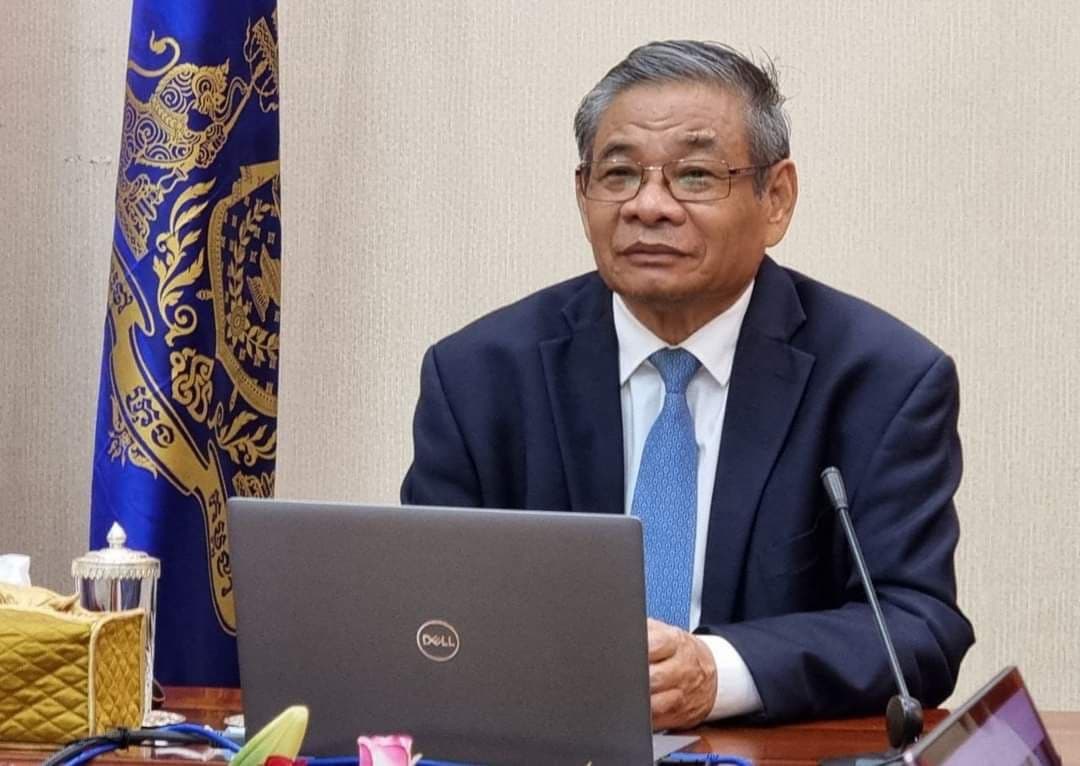
Yim Leak’s family was never minor. For decades, his father, Yim Chhaily (also rendered Yim Chhay Ly), occupied a coveted position in the Cambodian order: the politician-patron whose titles—Deputy Prime Minister, party vice-chair—are less resume than map legend. Influence branched into policing and finance, land and concessions, the trappings of a broken system dominated by a venal elite.
But the catalytic moment in the family’s ascent wasn’t a deal or a license or the slow climb of a loyal technocrat. It was a wedding. When Yim Leak’s sister, Yim Chhay Lin, married Hun Many (Cambodian Prime Minister Hun Manet’s younger brother), the Yims weren’t simply allied with power—they were absorbed into it.
That wedding changed everything. It turned a powerful family into the family. In a system designed around proximity to a single family, there is a difference between being elite and being inside. By joining with the Huns, the Yims didn’t just secure influence—they became part of the architecture of control. From that point on, their fortunes were indistinguishable from the regime’s own survival.
Yim Leak then layered on a second alliance, this one across a border: his marriage to Visnie “Beat” Thepcharoen, a scion of Thailand’s real-estate world. If the union with the Huns was the political hinge, Visnie was the commercial bridge—an entrée into Thai capital, property, and prestige. Together, the bonds remade Leak’s horizon. Domestic protection multiplied into regional leverage. Political power became market inevitability.
None of this is accidental. Scholars describe Cambodia’s governing logic as the fusion of a coercive state to a corrupted economy through an elite patronage network. The CPP does not rule by consent so much as by control; it sustains that control with money—rents from industries engineered or allowed to be predatory as a means of securing the loyalty of the country’s security services. Over time, those predatory industries evolve. My own May 2025 study charted how, as a principal economic interest of the regime, logging merged with land grabs; land grabs matured into casino development; casinos metastasized into online scamming—each iteration more liquid, more scalable, more insulated from public accountability, more tightly controlled by its Hun-dynastic core.
The key criteria for marriage in such a system is not romance; it’s policy. Kinship binds bureaucratic loyalty to business continuity. The “family is the firewall” so to speak. Invested foreigners—whether the border-casino barons, the Chinese developers, or the Thai financiers—learned to plug into this circuitry: pay the right people, partner with the right surnames, accept that the rule of law in Cambodia is a subscription service. One respondent to my study suggested that “the oligarchs don’t care where the money comes from.” By this they meant that the patronage network requires a constant flow. Its first principle is survival.
Leak’s rise fits this design with precision. The Hun family connection insulated him at home; the Thepcharoen alliance gave him a launch pad in Thailand. He wasn’t just a businessman favored by the regime; he was the prototype of a 21st-century Cambodian princeling—his political security and foreign capital interlocking by design.
In our earlier Whale Hunting installment, we traced how this system plays out on the ground. Long Bay—marketed as a coastal paradise, but in reality a failed resort—became an archetype. Developed by Zhengheng, a firm born of Chinese capital and Cambodian state protection, Long Bay sprawls across Union Development Group’s mega-concession, the Belt-and-Road-era utopia-on-paper that in practice was a honeypot for laundering, gambling, and, eventually, industrial-scale online scamming. BIC Bank and BIC Security—Leak’s primary “clean” financial vehicles in Cambodia—were listed as partners. Survivors’ testimonies and local reporters’ work have described in detail what “partnership” amounted to on the ground: fortified compounds, forced criminality, debt bondage, the now-familiar choreography of modern slavery in a Cambodia the US Department of State recently named a “state sponsor” of human trafficking.
But Long Bay is not the whole story of Yim Leak’s documented ties to the scam-trafficking industry. It’s merely the beginning.
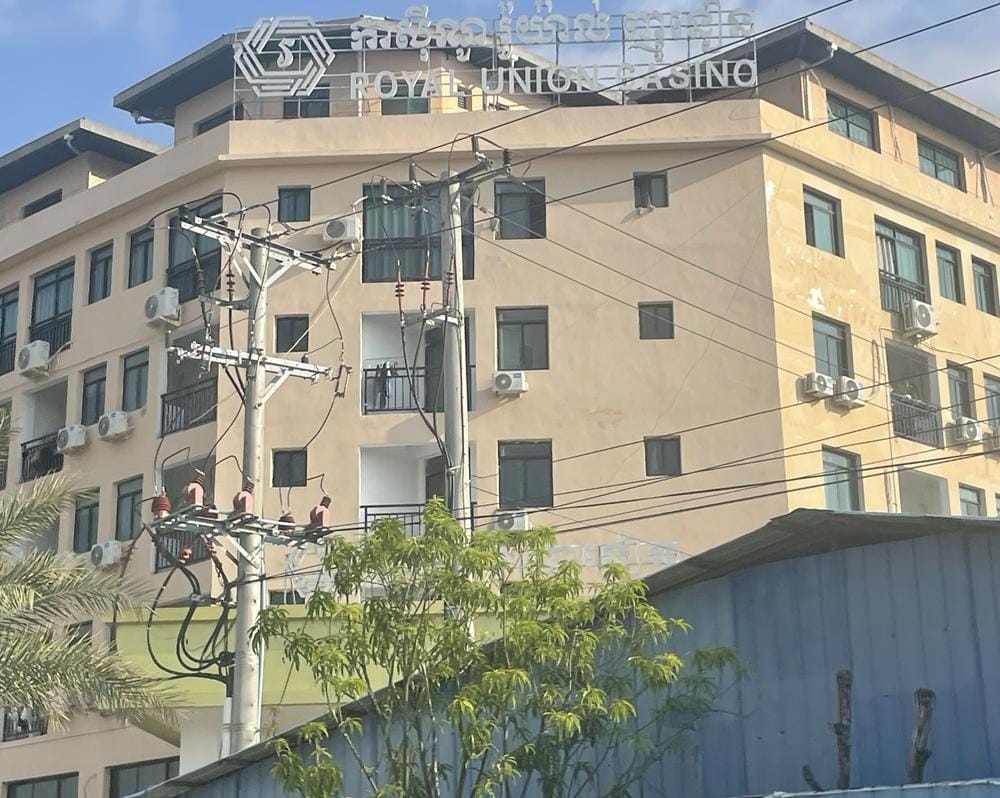
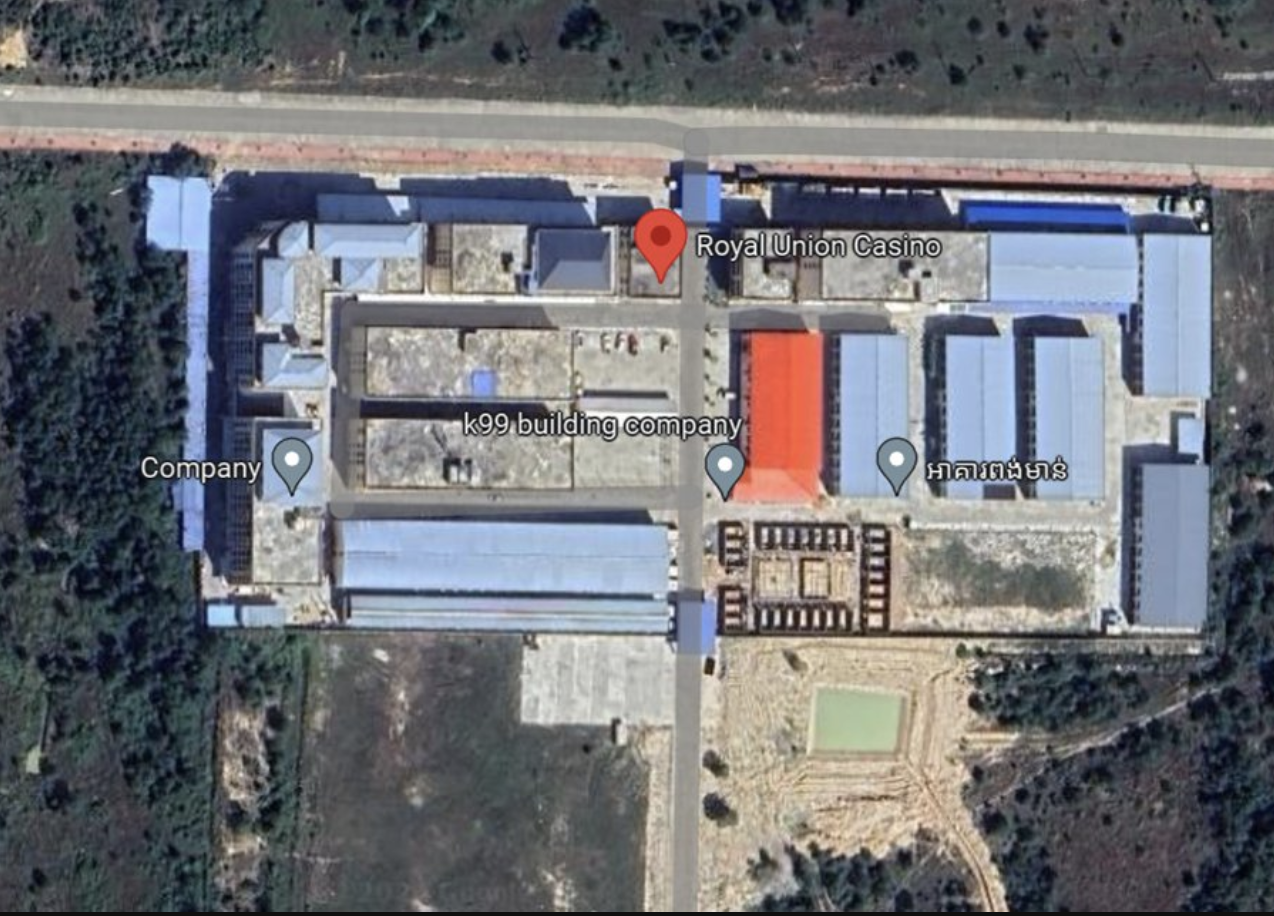
Enter Sihanoukville’s K99, another notorious site in Cambodia’s vast archipelago of scamming and state-sponsored abuse. Until recently, Royal Union Investment Co., Ltd held a license there. For a period, Cambodia’s corporate registry listed Yim Leak as a director of Royal Union. Later, his name vanished from the filings. Today, the company record is simply blocked from public view altogether. This is not an isolated records gaffe. A parallel situation happened recently, when, following US Treasury sanctions against Hun family business partner and ruling party senator Ly Yong Phat, his own vast corporate holdings simply vanished overnight from Cambodia’s corporate registry.
In a country where all legal and extralegal power flows through the family to which Yim Leak is now tangentially connected, erasure reads like an admission.
In both locations, Long Bay and K99, Leak is likely best viewed not merely as a financier or passive director but as an administrative node—someone who quietly helps translate political protection into criminal impunity and, ultimately, cash.
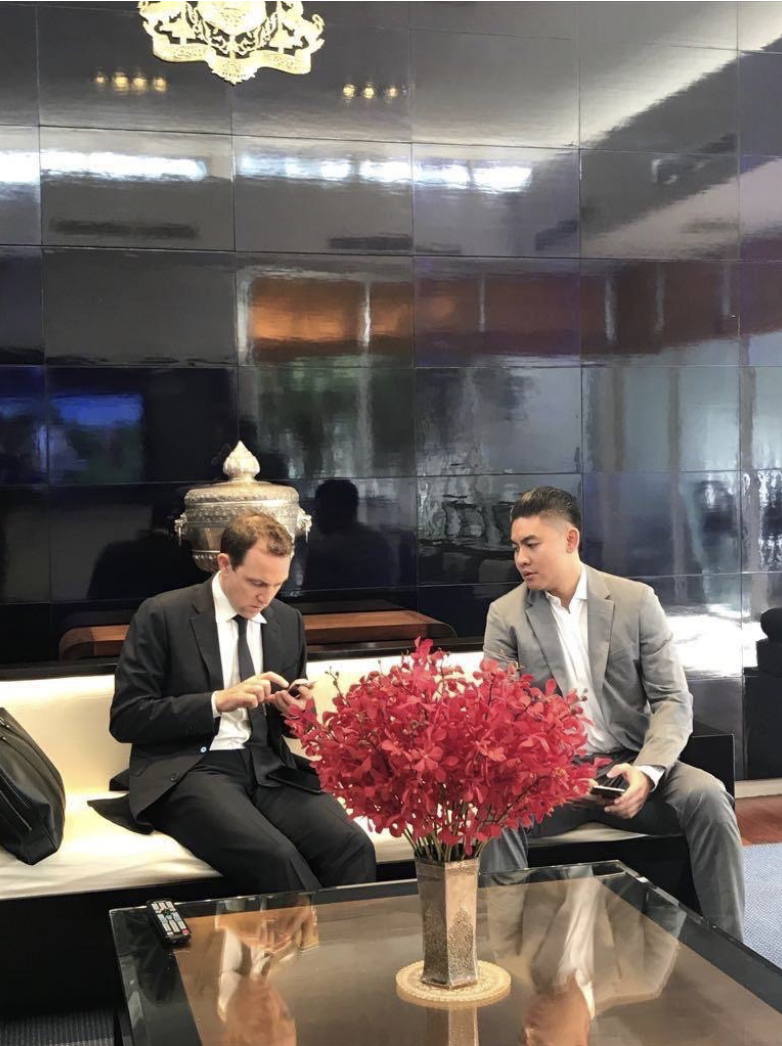
Corporate filings link Mauerberger’s fronts directly to Leak’s. “Ben Smith” appears on Cambodian entities such as U Properties alongside Leak’s, while Mauerberger’s wife holds a stake in a Thai company that controls a Laos-based crypto-mining venture with a co-founder of Leak’s BIC Bank. Their share purchases in Thailand, worth hundreds of millions of dollars, show coordinated movement between BIC and Mauerberger-controlled vehicles—a deeply synergistic partnership. Yim Leak and his wife fly on a Gulfstream G650 bought for him by Mauerberger.
For years, their cross-border machine worked because it was quiet. Cambodian elites extracted; Thai power brokers understood; foreign capital flowed seamlessly through sanctuaries styled as resorts, casinos, and “special economic zones.” Then the politics shifted.
In 2025, as border tensions flared and Hun Sen was actively maneuvering to unseat a Thai Prime Minister, Royal Thai police mounted a major seizure operation targeting assets linked to Cambodian senator and scam magnate par excellence Kok An (notably linked to none other than K99)—an escalation as notable for its nerve as for its timing. On one level, it was law enforcement; on another, it was political theater, the Thai government showing it could punch back on its neighbor’s meddling by hitting the criminal economy enslaving Thai nationals and defrauding Thai households.
The border hardened. Rhetoric did, too—on both sides. Cambodian nationalism rallied around the Hun center; Thai nationalism portrayed Cambodian compounds as national security risks.
And then the threats started.
Tom and Bradley were writing about the Mauerberger cabal for months, but only after our investigation drew a bright line from Thai political money to Cambodia’s scam economy did Thailand’s Deputy Prime Minister Thammanat Prompao and the South African fixer Benjamin Mauerberger voice their displeasure.
INTERPOL Red Notices were invoked like personal weapons; billion-baht SLAPP suits were dangled and mixed with criminal charges. In a region where defamation law often functions as an elite shield, it was familiar—but still breathtaking: a sitting deputy prime minister (and convicted felon) musing about using an international policing system to punish journalists for exposing his ties to a money-laundering syndicate.
The timing matters. The threats didn’t come when we wrote about jets or watches or even Thai energy ambitions. They came when the network’s Cambodian spine was made explicit—when readers could see that Bangkok’s political class was entangled with Phnom Penh’s most shameful export. Tens of thousands of Thais have been trafficked into Cambodian compounds; hundreds of thousands have been fleeced online. The politics of that are simple: link a Thai politician to the Cambodian scam engine and you don’t just bruise his reputation; you threaten his entire mandate.
For Yim Leak too, the nationalist turn cut both ways. His Thai marriage—once the perfect bridge—suddenly became a liability. The same cross-border links that made him useful to a money network and a political dynasty now painted a bullseye on his Thai footprint. You don’t need to follow the paper trail to know what he did next; just look at the empty apartment.
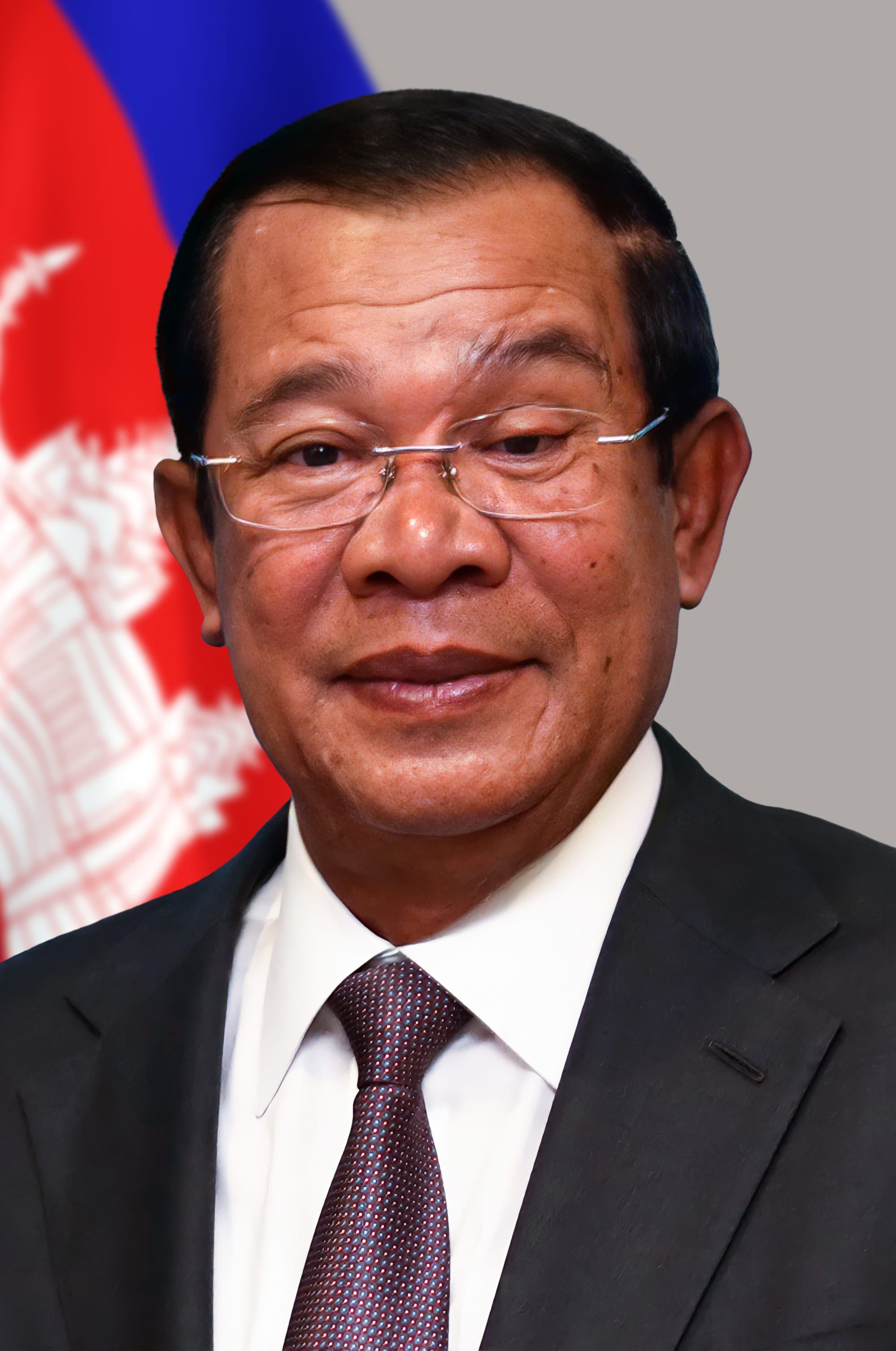
There is a temptation, at moments like this, to narrate collapse. That would be a mistake. Systems built over decades don’t evaporate; they adapt. When visibility grows, the smart players move into the shadows or shift the geography. If Thailand is hot, Dubai cools. If a Golden Triangle SEZ feels watched, Sihanoukville beckons. If company records are inconvenient, records disappear.
What has changed is not the existence or power of this network but its visibility and how it now needs to adapt. The Hun machine is as durable as it is unsentimental. If a cross-border playboy’s profile threatens the center, he is expected to lower it. If a Thai bridge becomes radioactive, its traffic is rerouted.
Leak’s silence, the shipment of assets back to Phnom Penh—these are not the gestures of a man in exile. They are the moves of someone reading the room and knowing where his true power lies. When your primary asset is proximity to the dynastic core, you do what proximity requires.
This is the lesson the Leak-Mauerberger story offers beyond the personalities and the swag: coercive patronage systems sustain themselves through crime until transnational accountability renders the arrangement untenable. Sometimes that accountability looks like targeted sanctions, asset seizures, or a long overdue extradition. More often, it looks like something quieter, but braver.
As Anne Applebaum notes in her highly relevant 2024 monograph Autocracy Inc, “the behavior of nations are not merely calculable pieces in a game of Risk. They can be altered by acts of cowardice or bravery, by wise leaders and cruel ones, and above all by good ideas and bad ones.”
Good policy always follows grassroots courage. The limited accountability that has surfaced in this space -- the Kok An seizures, the Ly Yong Phat sanctions -- did not begin in press releases. They grew from years of reporting, investigation, diplomatic pressure, families demanding answers about sons and daughters trafficked across the border. In Cambodia, where the state has perfected the arts of denial and deletion, accountability will never come from the top. It always arises, rather, from more subtle forms of resistance: a survivor giving testimony on an oligarch; a local reporter filing one more story before the paper is shuttered or he’s thrown in jail, a civil servant pushing back against endemic corruption; the diplomat or NGO worker who decides to buck the curve of complicity.
While exposure may not equal justice, visibility does change the math. It raises costs, narrows exits, and reveals the mechanism of abuse. Criminal kingdoms thrive on the belief that truth is ornamental. It isn’t. Among other things, truth is an essential public good for public-safety. Spoken often enough, it alters where money and power can travel – and how. It unsettles marriages of convenience. It makes the untouchable flinch.
The penthouse may be empty and the paper trail thinning but the voices are not. In a unipolar state, that is how limits appear—first as a whisper, then as a line someone powerful chooses to cross no more.
Got a question or a tip for us? Get in touch at whalehunting@projectbrazen.com. You can also contact us securely here.
You can also follow Whale Hunting on Instagram, Threads and on X (Twitter). To chat with fellow Whale Hunters and stay in touch with Bradley and Tom, join our Discord server.
For unlimited access to Whale Hunting’s investigative reporting, consider signing up for a paid subscription. You’ll get special editions of the newsletter and the Weekender, as well as premium podcast access and discounted merch.
Enjoying Whale Hunting but not ready to subscribe? Show your support by leaving a tip (via credit/debit card or crypto) instead.
