The Great Yacht Swap: Inside Mauerberger’s Escape to the Seychelles
by Bradley Hope
/

Follow our journey from a single private jet to a multi-billion dollar crime ring. We detail how we uncovered a Southeast Asian scam network that targets Americans and the politicians trying to stop us.
This is a reporter's notebook—a behind-the-scenes look at an investigation that has shaken global elites. For the past several weeks, Whale Hunting has been at the center of a developing global crisis. Much like the notorious 1MDB scandal, we have faced direct threats from world leaders and powerful corporations entangled in a vast criminal network. We’ve published cease-and-desist letters from high-powered lawyers and documented demands for our arrest from Thailand’s deputy prime minister.
Why are they so desperate to silence us?
We have uncovered a multi-billion-dollar criminal enterprise that links powerful politicians and financiers with a major cryptocurrency exchange and Chinese mafia syndicates. The victims of this scheme are ordinary people from around the world—primarily Americans, but also Europeans and Asians—who have been conned into investing their life savings into fake crypto schemes, only to watch it all vanish.
We've published 16 stories so far. So here, all in one place, is our comprehensive coverage – and how we went about breaking this story.
-- Tom
This story is open to all who subscribe. But investigations like this aren’t cheap. If you believe accountability journalism matters, consider upgrading to a paid subscription—or sending a one-time boost. Every contribution directly funds more reporting like this.
Have a tip? Reach us at:
📩 whalehunting@projectbrazen.com
📧 projectbrazen@protonmail.com
🔒 Secure contact details here.
We protect our sources.
Our investigation began two years ago with a single clue: a South African man named Benjamin Mauerberger bought a $20 million Gulfstream G550 private jet for Yim Leak, a Cambodian princeling. A simple search revealed Mauerberger to be a career criminal with a 25-year history of stock scams. He made the jet purchase using a Cambodian diplomatic passport under the alias Ben Smith. Yim Leak, a member of one of Cambodia’s most powerful political families, liked to flaunt his wealth on Instagram, including the jet and his fleet of luxury cars. After we reported on the Gulfstream, he quickly scrubbed his social media. Our investigation paused.
Earlier this year, Mauerberger reappeared, this time buying a $60 million Bombardier Global G7500 for former Thai Prime Minister Thaksin Shinawatra, who had just returned from 15 years in exile. We obtained a photo of a meeting between Thaksin and Mauerberger in a downtown Bangkok restaurant. Given his history as a bagman for a Cambodian princeling in a country where half the GDP is derived from criminal activity, the question was clear: what was Thaksin’s relationship with this man?
We published an entry on our Unofficial Rich List, estimating Thaksin’s true wealth at $2.5 to $3.5 billion and highlighting his links to Cambodian dirty money. The story sent shockwaves through Thailand, which had recently been involved in a border dispute with Cambodia.
As often happens in journalism, our report came at a critical moment. Sources began to contact us, alarmed by Mauerberger’s growing power within Thailand’s political establishment. They revealed he had overseen the transfer of hundreds of millions of dollars through a Singapore-based front company and into Thai equities. These secret purchases, using Mauerberger's wife—a former British-Thai model named Cattaliya Beevor—and other associates as cutouts, had secured control of Bangchak, one of Thailand’s largest energy companies. The transactions were all hidden in plain sight within Thailand’s own securities records.
The central question remained: where was a career South African scammer, now a confidant of both Thaksin Shinawatra and a Cambodian princeling, getting hundreds of millions of dollars? We had our suspicions and kept digging.
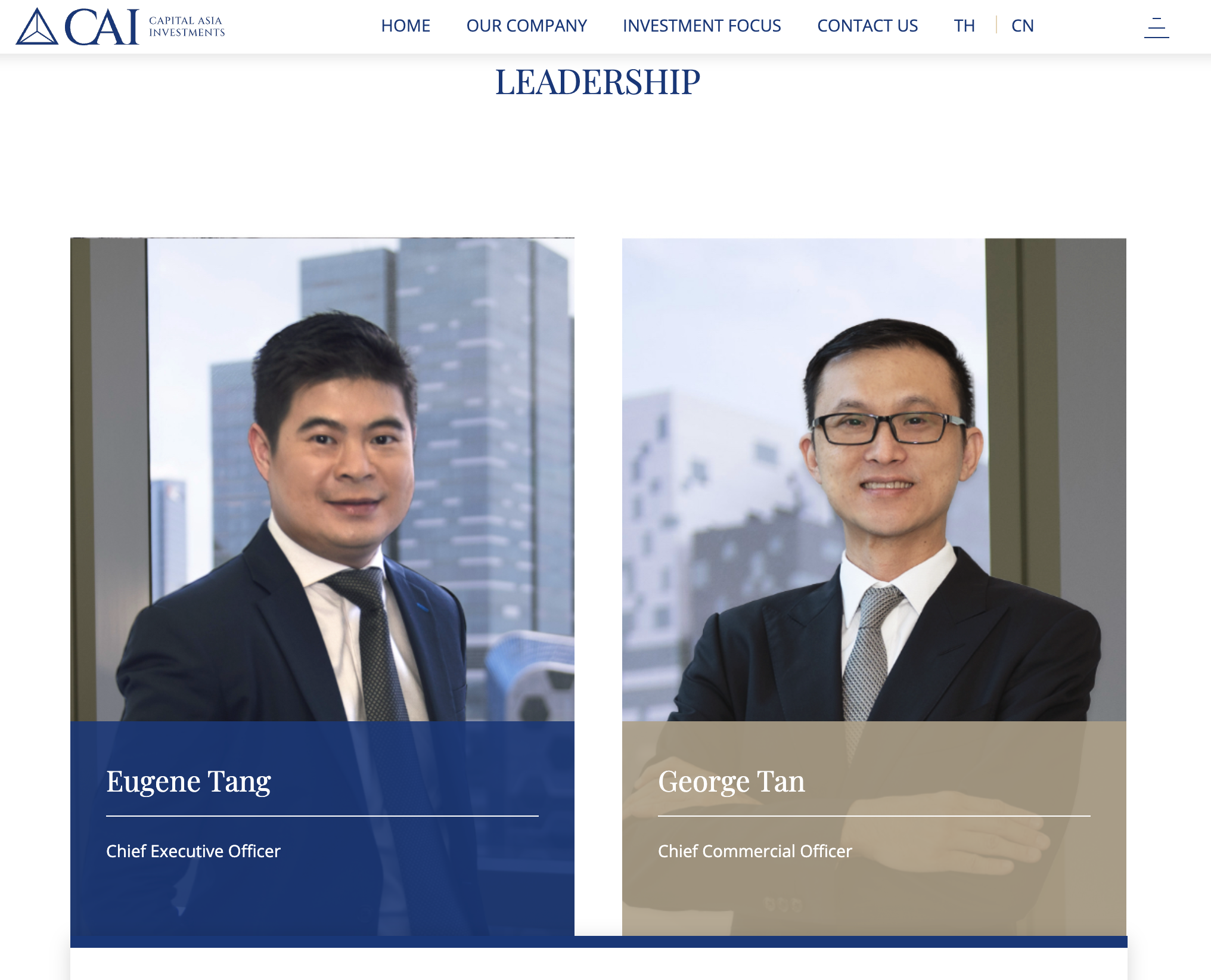
The share transactions were managed by a small Singaporean firm, Capital Asia Investments. A search of a U.S. securities offering revealed that one of the firm's partners, Eugene Tang, co-managed a fund with Mauerberger's wife, Cattaliya Beevor. We also found records in Cambodia's corporate registry linking Eugene Tang to a property company with Yim Leak and the alias "Ben Smith." A copy of Mauerberger's Cambodian diplomatic passport confirmed the alias. Further digging revealed that Beevor had purchased a $20 million penthouse in Manhattan on "Billionaire's Row."
Elite political patronage, the movement of billions, and flashy U.S. real estate. The parallels to the 1MDB scandal were undeniable.
We next profiled Mauerberger: his privileged childhood in Cape Town, his role in boiler-room scams throughout the UK, Europe, and Australia in the 2000s, and his fateful meeting with Yim Leak. The two-bit scammer suddenly transformed into a financial kingpin, facilitating the movement of billions of dollars.
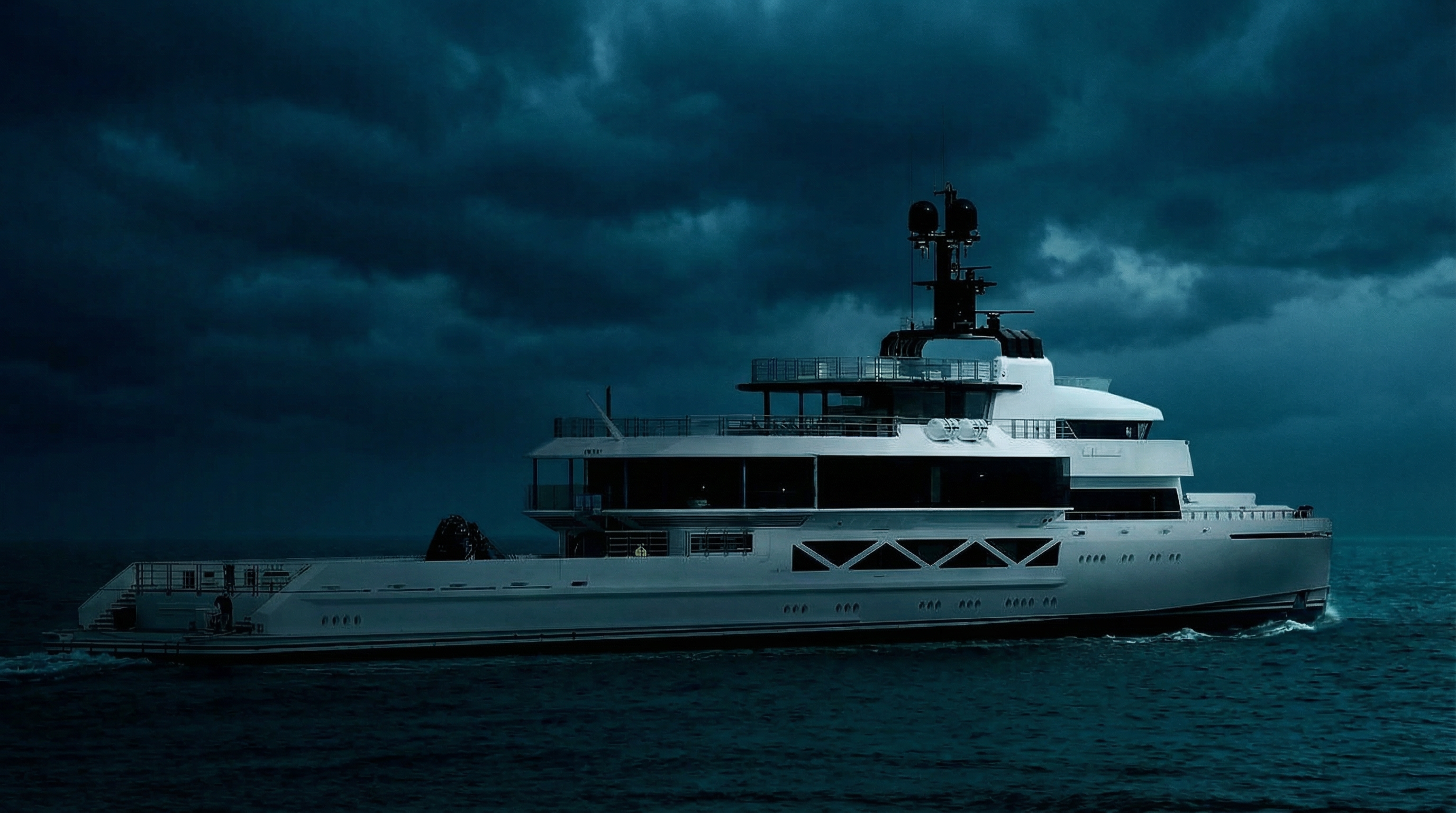
Efforts to reach Mauerberger at his now-abandoned Bangkok office were unsuccessful, but our network of sources grew. We discovered he owned a $100 million yacht, the Wanderlust, used to schmooze Chinese, Cambodian, and Thai businessmen. He was a constant presence at Thaksin's side, in meetings with global bankers and casino CEOs. Just as we published our profile, however, Thaksin was sent back to jail on a prior corruption charge, and Mauerberger lost a powerful protector.
Our next story highlighted a key difference between this network and the 1MDB scam. A decade ago, Jho Low relied on global banks like Goldman Sachs to launder stolen funds. This new fraud, however, operates in the age of cryptocurrency. Mauerberger’s choice was not a bank, but a crypto exchange: KuCoin. His network, including Yim Leak’s BIC bank, the Singaporean financial company, and his wife's cutouts, secretly took a controlling stake in a Thai finance company, Finansia X PCL. They then sold those shares to KuCoin-controlled nominees. We uncovered the trail through corporate records and sources. For example, a KuCoin employee was a director of a Seychelles company that bought shares from Cattaliya Beevor. In another transaction, Mauerberger’s network used secret Variable Capital Company (VCC) structures in Singapore to facilitate KuCoin’s secret purchase of another stake. This complex web of transactions was designed to allow KuCoin and Mauerberger’s Cambodian partners to move vast sums between the traditional banking sector and the crypto world without any oversight. Corporate records also showed that Mauerberger and Yim Leak controlled a bitcoin mining operation in Laos.
At this point, we faced our first legal threat: a cease and desist letter from KuCoin. We decided to publish the letter in its entirety without comment. We have not heard from them since.
We then published a story about the four super yachts owned by companies connected to Beevor and Mauerberger, with a combined value of a quarter-billion dollars. The sheer scale of the wealth was staggering.
Our next deep dive focused on Mauerberger’s political shield in Thailand. Despite Thaksin’s imprisonment and the ousting of his daughter, former Prime Minister Paetongtarn Shinawatra, Mauerberger seemed to retain his high-level protection. The nation’s new government appointed Vorapak Tanyawong, a veteran commercial banker, as deputy finance minister. We provided evidence showing how Vorapak and his wife had been instrumental in the Mauerberger network’s takeover of Finansia and the subsequent sale of those stakes to KuCoin. The money laundering machine, and the direct involvement of Thai politicians, was now in clear view.
But where did this criminal enterprise generate these billions? One Western government estimates the network's assets at over $1.5 billion. We next partnered with Jacob Sim, a transnational crime expert and Harvard fellow, to expose the direct link between Yim Leak’s BIC Bank and the Zhengheng Group, a Chinese-owned company sanctioned by the U.K. in 2023. The U.K. alleges Zhengheng held workers against their will at a failed resort in Cambodia, where they were forced to work as scammers targeting Americans.
The scale and nature of this threat, which costs Americans $10 billion annually, is finally being recognized. Hundreds of thousands of human trafficking victims – primarily from Asia, Africa, and Latin America – are lured to scam compounds in Cambodia, Burma, and Laos, where they are forced to perpetrate "pig butchering" scams against people in the U.S., Europe, and other parts of Asia. This fraud, where victims are "fattened up" with the promise of gains before having their life savings stolen, is now the fastest-growing form of financial crime affecting Americans.
Mauerberger’s influence had become so widespread that when OpenAI CEO Sam Altman sought to launch his controversial iris-scanning technology in Thailand, he partnered with a company controlled by Mauerberger’s network. We showed how Mauerberger had arranged a panel appearance with Thaksin (before his jailing) for one of Altman’s business partners.
About six weeks into our coverage, Mauerberger finally broke his silence. While Thai media, fearing defamation suits, remained largely silent, our posts on social media were reaching hundreds of thousands of Thais. Mauerberger issued a statement denying everything, claiming Whale Hunting was a political pawn, and threatening a lawsuit. He failed to address a single one of the core allegations: his ties to sanctioned Chinese-Cambodian businesses, the secret stock purchases, the payoffs to Thai politicians, the unexplained billions, and the suspicious ownership of super yachts, private jets, and penthouses. He also ironically called for an investigation of Whale Hunting by the very organizations—the ICIJ and OCCRP—that expose the sort of hidden financial dealings he is entangled in.
Brave Thai journalists identified the man in our photo with Thaksin and Mauerberger as Deputy Prime Minister Thammanat Prompao. He admitted it was him and, outraged, threatened to issue an Interpol Red Notice for our arrest. We had never mentioned him before, but we did now, publishing his threats.
The bombshell came with our next story: the U.S. Department of Homeland Security is now investigating Mauerberger as part of a global crackdown on the pig butchering industry. In Thailand, parliament has launched its own probe, led by lawmaker Rangsiman Rome, to investigate the connections between scam networks, political figures, and “gray money” flows from Cambodia.
On October 10, we took a slight detour. Mauerberger had publicly denied being the "Benjamin Berger" who faced a 2019 criminal charge by the Thai SEC for a stock scam—a small-time crime from before his ascent to kingpin (even though this was a known Mauerberger alias at the time). His denial of this minor charge was telling, given the far more serious allegations against him. We are went looking for the real "Benjamin Berger" and the trail led to an American actor living in China.
Jacob Sims returned with a masterful analysis of Yim Leak and his family’s immense power in Cambodia. Our sources tell us that Yim Leak has since moved the contents of his Aman penthouse in Bangkok back to Phnom Penh.
Finally, we reported that a new bill in the U.S. Congress is seeking to sanction Mauerberger and Yim Leak, signaling the political consequences of this corruption are reaching the highest levels. As the global dragnet tightens, Mauerberger and his wife have reportedly fled Bangkok for Dubai.
Where will this story of greed, corruption, and human exploitation lead us next?
BREAKING NEWS: Huge blow to scam centers in Southeast Asia. In the largest ever asset seizure in U.S. history, $15 billion in Bitcoin seized from Prince Group chairman Chen Zhi, a Cambodian. U.K. freezes £12 million mansion in London. Next up: The Mauerberger network and Thai officials.
Got a question or a tip for us? Get in touch at whalehunting@projectbrazen.com. You can also contact us securely here.
You can also follow Whale Hunting on Instagram, Threads and on X (Twitter). To chat with fellow Whale Hunters and stay in touch with Bradley and Tom, join our Discord server.
For unlimited access to Whale Hunting’s investigative reporting, consider signing up for a paid subscription. You’ll get special editions of the newsletter and the Weekender, as well as premium podcast access and discounted merch.
Enjoying Whale Hunting but not ready to subscribe? Show your support by leaving a tip (via credit/debit card or crypto) instead.
 Related Posts