Priceless Hostages of Tehran
by Bradley Hope
/
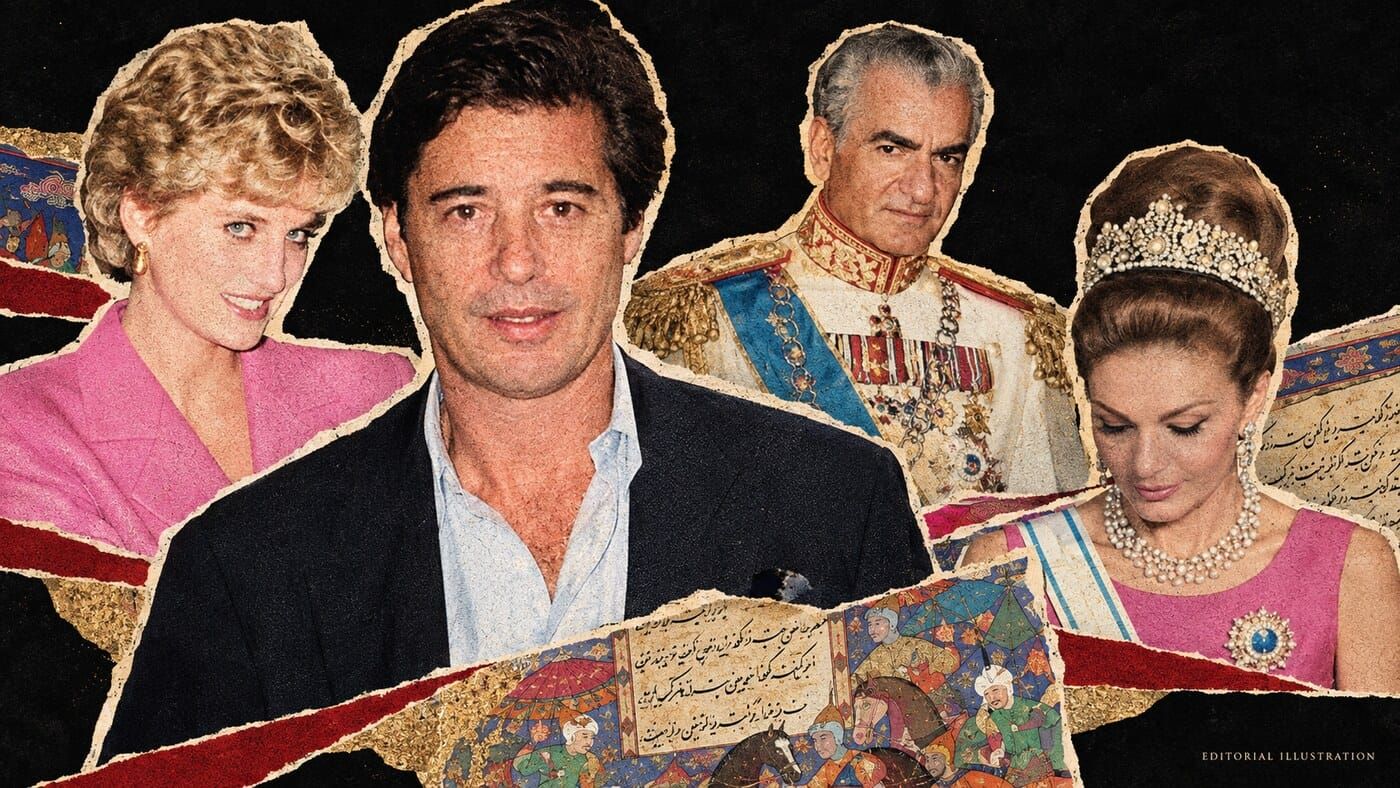
Iran’s rulers wanted a Persian masterpiece back. The deal involved a de Kooning and an art dealer having an affair with Princess Diana.
A bit of trivia: The Tehran Museum of Contemporary Art holds what is widely considered the largest collection of Western modern art outside Europe and the United States. Its collection includes Picassos, Pollocks, Warhols, Hockneys, a van Gogh and a Renoir. Until 1994, it also included Willem de Kooning’s Woman III.
After the Iranian Revolution, much of the collection could no longer be shown. Some works were considered too sexually explicit, others too Western or too closely associated with the Shah’s vision of Iran. They went into storage, almost like hostages. Woman III remained in Tehran while, thousands of miles away, a great Persian manuscript had been broken apart and dispersed through the international art market.
“Each treasure was a prisoner of politics and time—the Persian epic stranded in the West, the Abstract Expressionist masterpiece trapped in the East.”
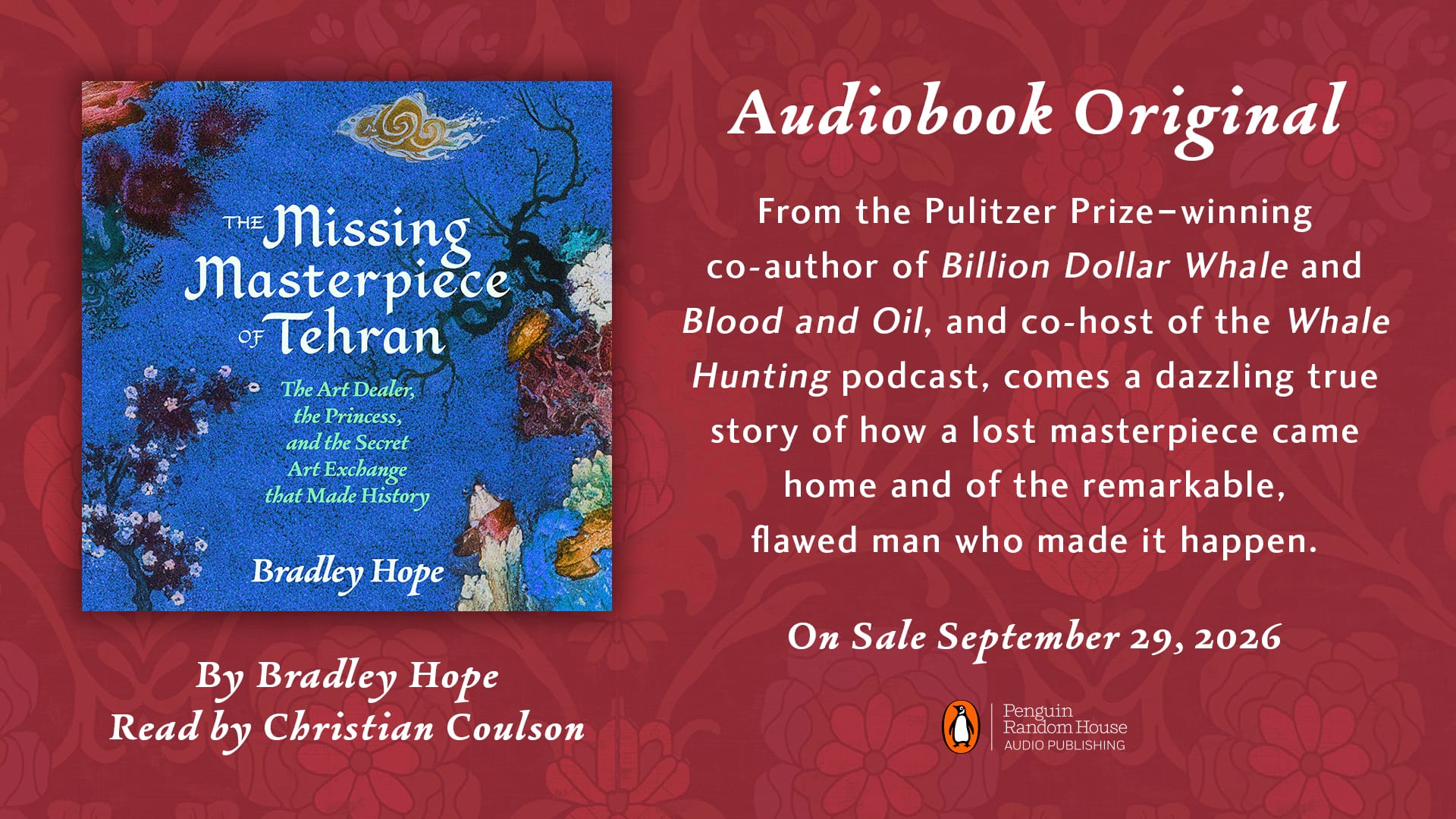
The tense and unlikely exchange of these two works is the subject of The Missing Masterpiece of Tehran, my new audiobook for Penguin Random House Audio, read by Christian Coulson and out on 29 September.
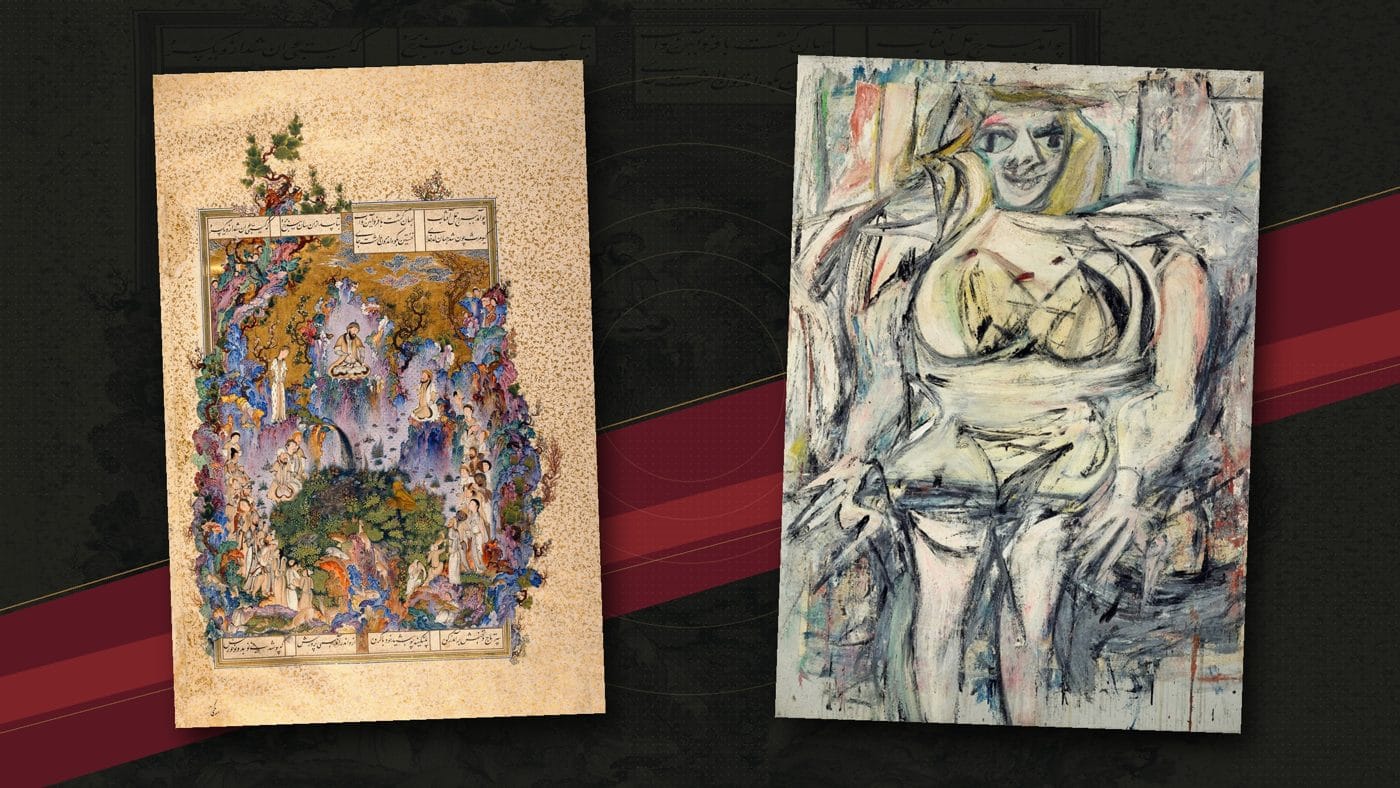
On 27 July 1994, the English art dealer Oliver Hoare waited outside Barclays Bank in London for a Securicor van. In the vault were three crates containing 118 miniatures from the Shahnameh of Shah Tahmasp—the largest surviving section of one of the great works of Persian art. The crates were headed to Vienna, then Tehran. Woman III was to come the other way.
Hoare was a hopeless romantic and a lothario. While negotiating the return of Iran’s great national treasure, he was also having an affair with Diana, Princess of Wales.
The manuscript in those crates was a sixteenth-century copy of a much older work. The Shahnameh, or Book of Kings, tells the story of Persia from its mythical beginnings to the Arab conquest: kings and demons, heroic battles, a father who kills his own son. Ferdowsi spent decades composing it. Near its end, he made a prediction:
I shall not die, these seeds I’ve sown will save
My name and reputation from the grave
Ferdowsi, Shahnameh, translated by Dick Davis.
Five centuries later, two generations of artists worked for more than twenty years on the copy made for Shah Tahmasp, filling it with 258 paintings and gold-flecked borders. The shah sent it to an Ottoman sultan as a diplomatic gift. It passed into the Rothschild collection and, briefly, into Nazi hands. In 1959, it was acquired by Arthur Houghton Jr., an American collector devoted to rare books. Houghton began dispersing its pages.
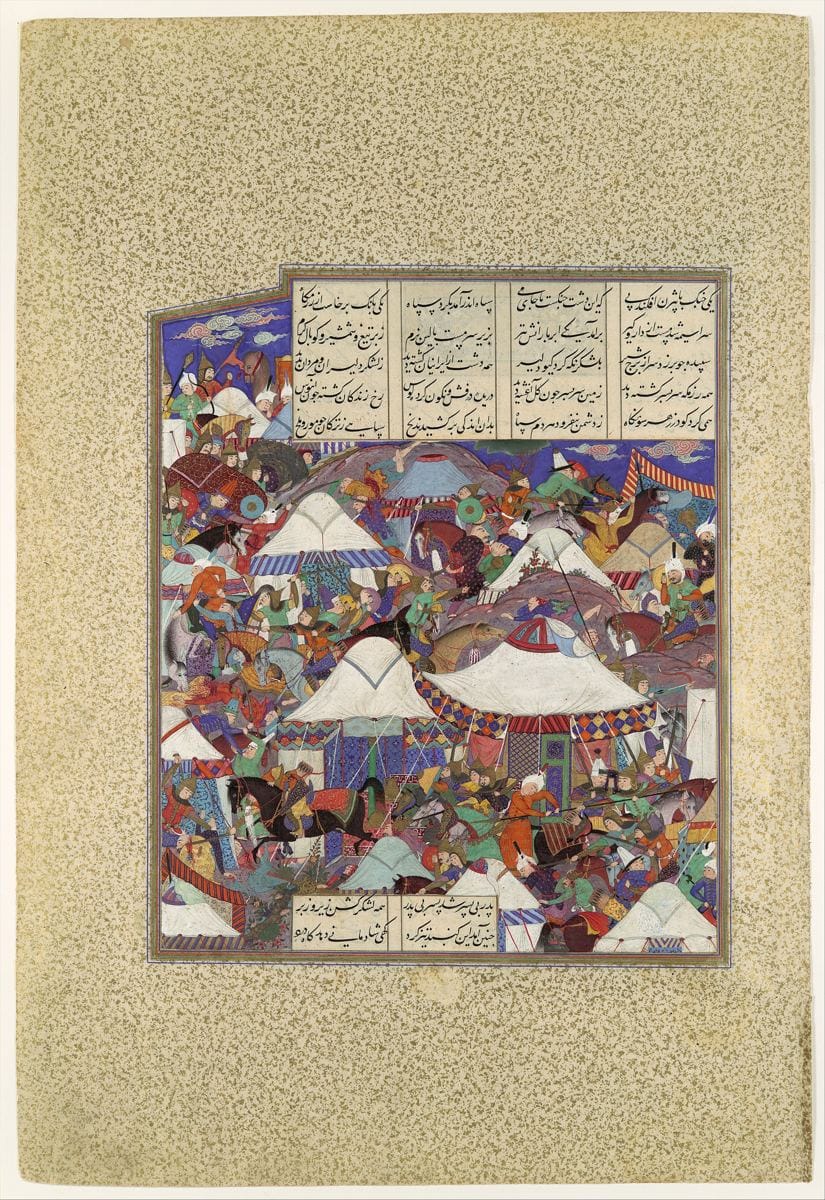
But why did the Islamic Republic want it so badly? The Shahnameh told of kings and heroes from before the Arab conquest, an inheritance whose place in an Islamic state could be contentious. Some clerics had dismissed it as a pagan relic, though Ferdowsi himself was a Shi’a Muslim. For the officials trying to recover this manuscript, it was a national treasure that had been abroad for more than four centuries. The Shahnameh was improbably first on the Cultural Heritage Organization’s list of things to bring home.
One of its champions was Mehdi Hojjat, an architect whose father had been Khomeini’s friend and cellmate. After the revolution, Hojjat worked to save the royal treasures that others wanted destroyed. His team once rescued a shah’s marble tombstone by suggesting that the men preparing to smash it should pray first. While they were away, his men took the stone in a pickup truck to save it.
Getting the manuscript back meant years of secret negotiations. An American working in the White House worried about who might be listening to his telephone. Iran became “Spain”; the Shahnameh became “a shipment of oranges.” Hoare was not always good at remembering the code.
The danger was real. Iran was already supporting terrorism abroad when, on 26 July 1994, a car bomb exploded outside the Israeli embassy in London. Initial suspicion fell on pro-Iranian extremists linked to Hezbollah. The bombing threatened to wreck the exchange just as the manuscript was due to be authenticated.
There is a question here that reaches beyond the art: what did these men value enough to take such risks? It is worth asking whenever negotiations with Tehran turn on assumptions about the people across the table.
Meanwhile, someone was calling Hoare’s home in Chelsea. Those calls would eventually overshadow the deal.
Hear the full story in The Missing Masterpiece of Tehran. Please do us a favor and pre-order now.
Got a question or a tip for us? Get in touch at whalehunting@projectbrazen.com. You can also contact us securely here.
You can also follow Whale Hunting on Instagram, Threads and on X (Twitter). To chat with fellow Whale Hunters and stay in touch with Bradley and Tom, join our Discord server.
For unlimited access to Whale Hunting’s investigative reporting, consider signing up for a paid subscription. You’ll get special editions of the newsletter and the Weekender, as well as premium podcast access and discounted merch.
Enjoying Whale Hunting but not ready to subscribe? Show your support by leaving a tip (via credit/debit card or crypto) instead.
 Related Posts