The Asphalt King Who Went Too Far
by Bradley Hope
/
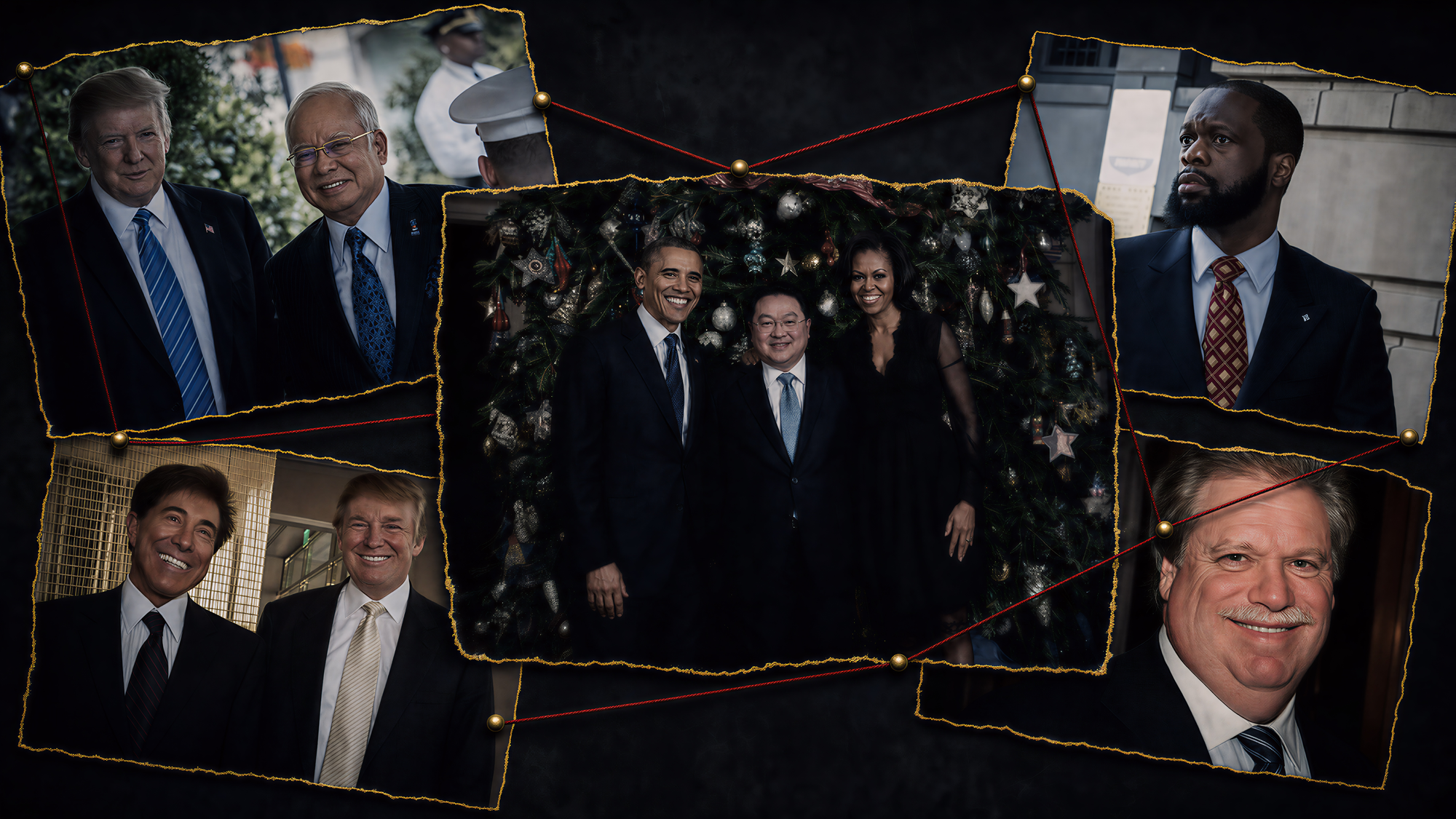
For more than a decade, Jho Low has been buying access to power. Yesterday, news reports confirmed Trump is actively discussing his pardon. Here is the full history.
“Nothing was more to be desired than that every practicable obstacle should be opposed to cabal, intrigue, and corruption. These most deadly adversaries of republican government might naturally have been expected to make their approaches from more than one quarter, but chiefly from the desire in foreign powers to gain an improper ascendant in our councils.”
— Alexander Hamilton, Federalist No. 68, 1788
Welcome to Whale Hunting, where we follow the money behind some of the world's most brazen financial crimes and expose the networks of people who enable them. Happy Fourth of July.
Officials familiar with Jho Low's pardon effort have told us in recent months that he is willing to pay more than a billion dollars — possibly closer to two billion — to make his U.S. criminal case disappear. That is a sum larger than what most countries recover in decades of anti-corruption work or ever, offered by a man who has never set foot in an American courtroom and who is by any definition an enemy of the United States.
Yesterday, CBS News reported that Donald Trump sat down to discuss pardons and had not yet decided whether Low should receive clemency.
If Low is pardoned and no corresponding asset settlement is announced, then it is possible that between one and two billion dollars in illict funds will flow to someone — and the American public will not be told who. If he is not pardoned, the U.S. government retains whatever dignity remains in refusing to sell justice to petty crooks with boatloads of stolen cash.
Either way, the story of how Low got to this point is worth telling in full. It is the story of a fugitive who spent more than a decade assembling a machine designed to corrupt the American government from the inside, and who made himself a critical asset to the spy agencies of the People’s Republic of China along the way, willing to tip the geopolitical scales toward Beijing in exchange for protection .
For the wider story, read our guide to Jho Low and 1MDB.
Low's origin story is by now well documented. A Malaysian student at Wharton, he talked his way into the inner circle of the Malaysian prime minister's stepson, then leveraged that access to engineer the creation of a sovereign wealth fund called 1Malaysia Development Berhad. Between 2009 and 2015, he orchestrated the theft of $7.65 billion from the fund (read our coverage last year to understand the full numbers) — money that was meant to develop the Malaysian economy — and spent it on a Hollywood studio, a superyacht, Van Goghs, Basquiats, and a $250 million gambling habit, all while paying off enough politicians and bankers across three continents to keep the scheme running. What matters here is what happened after the scheme collapsed: how Low converted himself from a fugitive into an operative.
The effort began in the Obama era, when Low's primary objective was simply proving he could buy access. He found his conduit in Pras Michel, the Fugees rapper who recorded "Ghetto Supastar" and then, from around 2012, reinvented himself as a political operator with an appetite for geopolitics. Pras was broke at the time, according to people we interviewed, and saw Low as a godsend.
Over the course of their relationship, Low would funnel more than $120 million through Michel. The first use of that pipeline was the 2012 presidential election.Michel took Low's money and contributed it both personally and through approximately 20 straw donors — Americans who gave in their own names and were reimbursed with stolen Malaysian funds.
Get the full story—free with your email.
This story is open to all and our work is available for free to anyone who signs up with their e-mail. But investigations like this aren’t cheap. If you believe accountability journalism matters, consider upgrading to a paid subscription – or sending a one-time boost. Every contribution directly funds more reporting like this.
Have a tip? Reach us at:
📩 whalehunting@projectbrazen.com
📧 projectbrazen@protonmail.com
🔒 Secure contact details here.
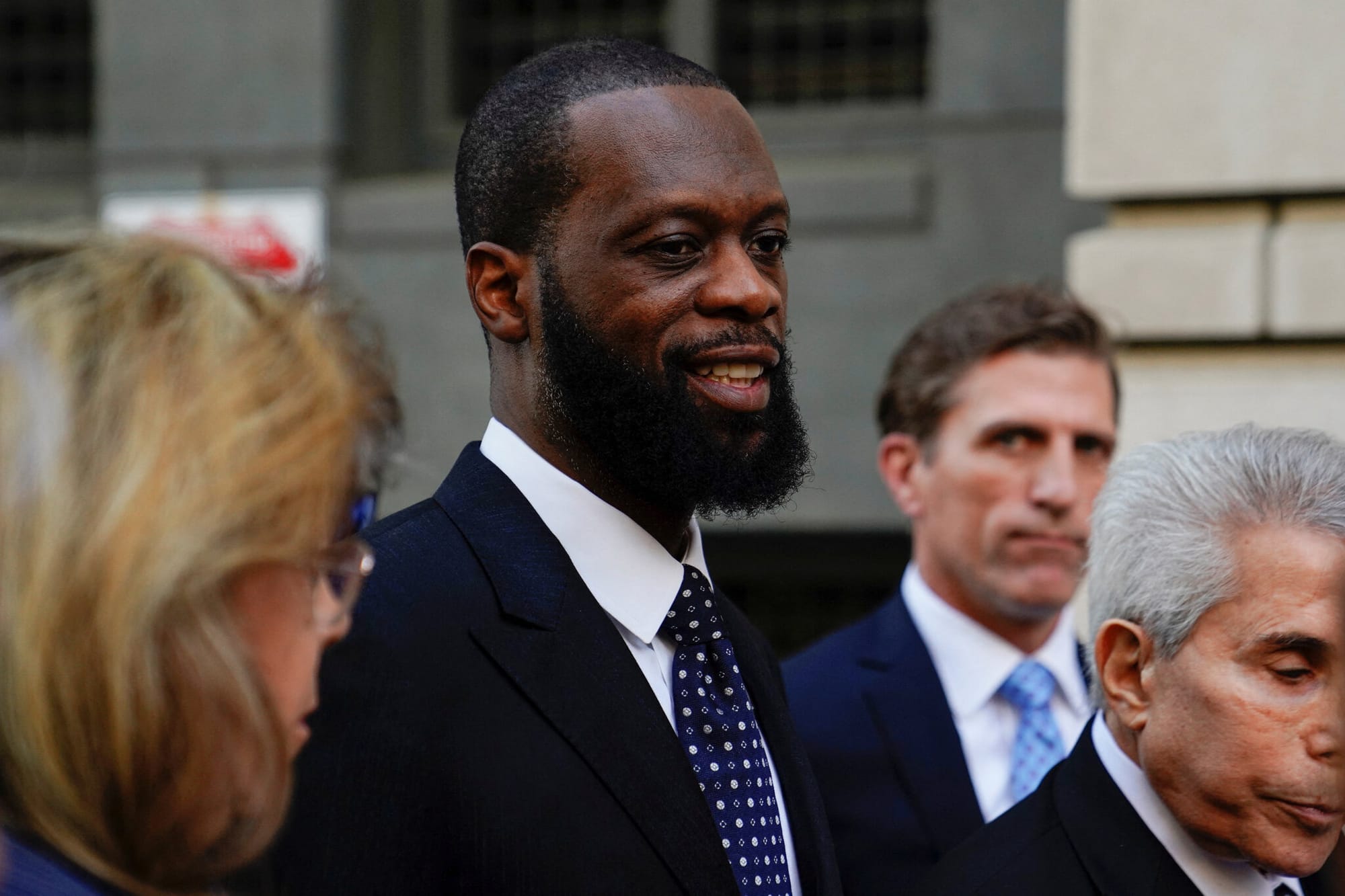
Roughly $865,000 went to the Obama Victory Fund, the president's joint fundraising committee with the Democratic Party. Another million-plus went to a pro-Obama super PAC called Black Men Vote, a group whose $1.33 million war chest was over 90 percent Low's money, laundered through an LLC called SPM Holdings.
At one point, a potential straw donor told Michel she was concerned about the legality of the arrangement and refused to participate. Michel said "Okay" and moved on to the next name.The FEC received a complaint. Democratic commissioners voted to investigate. Republican commissioners blocked it on a 3-3 deadlock, arguing that pursuing the case would render "the constitutional rights of closely held corporations to engage in independent political speech functionally meaningless."
The scheme ran for three more years before the Justice Department indicted. But the campaign donations were only the door-opener. The real prize was proximity. Michel tried repeatedly to get Low into fundraising events, but campaign officials blocked him — his "party guy" reputation made him "too hot." Undeterred, Low sent his father, Larry Low Hock Peng, in his place to a September 2012 fundraiser at the Washington, D.C., home of Frank White Jr., an Obama bundler, where his father sat next to the President. The invitation included a printed disclaimer about the "prohibition on foreign and conduit contributions."
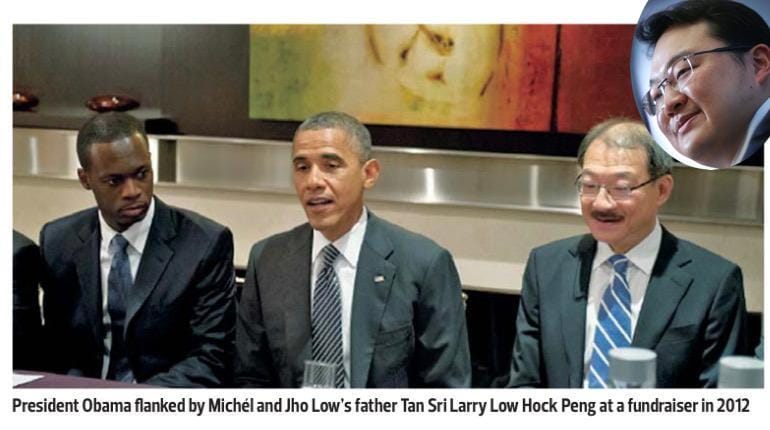
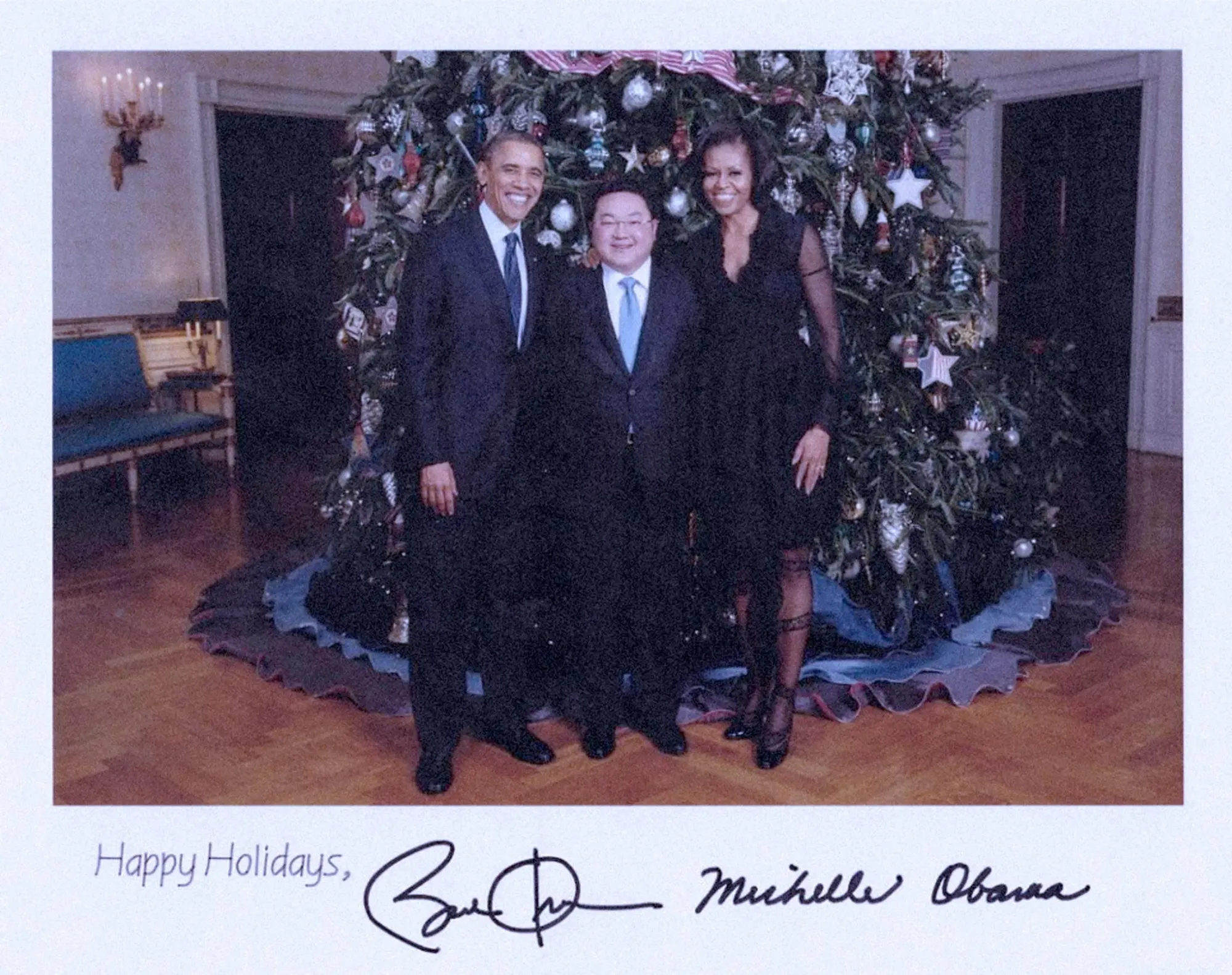
Eventually, after frantic efforts, Low got what he wanted. He hung the photograph in his houses and mailed it out on Christmas cards to associates in Abu Dhabi, Riyadh, and Beijing. It showed him standing next to Barack and Michelle Obama at a White House Christmas party. Even his own defense attorneys would later concede the point: "Low's motivation for giving Mr. Michel money to donate was not so that he could achieve some policy objective. Instead, Low simply wanted to obtain a photograph with himself and then-President Obama." To Low it was worth more than almost any deal he ever closed, because it proved the one thing money is not supposed to be able to buy.
The $20 million behind the holiday-party invitation ran through White, who had the kind of bundler access Low could not manufacture on his own. In 2013, White formed DuSable Capital Management with Shomik Dutta, a former White House special assistant and Obama fundraiser. It was one strand of a larger relationship. Another $69 million flowed into DuSable for a solar project that was never built.
That payment landed close to a December 2014 golf game in Hawaii between Obama and Malaysia's then prime minister, Najib Razak, which Low would later boast of arranging. During that same Hawaii trip, Najib's credit card was declined while trying to buy a $130,000 Chanel watch as a gift for Michelle Obama. Najib immediately messaged Low o†n his BlackBerry, and Low scrambled to contact AmBank relationship manager Joanna Yu to ensure the 1MDB-funded transaction went through, writing: "From Datuk Seri, please help ASAP, he is chasing, he is in Hawaii, and wants to charge USD100,000."
White settled with the Justice Department in January 2025, returning the $20 million while appearing to keep the DuSable tens of millions, and he has denied any wrongdoing. Dutta himself was never implicated or charged with any wrongdoing in the scandal.
When American law enforcement closed in, Low did not simply run. He made himself indispensable.
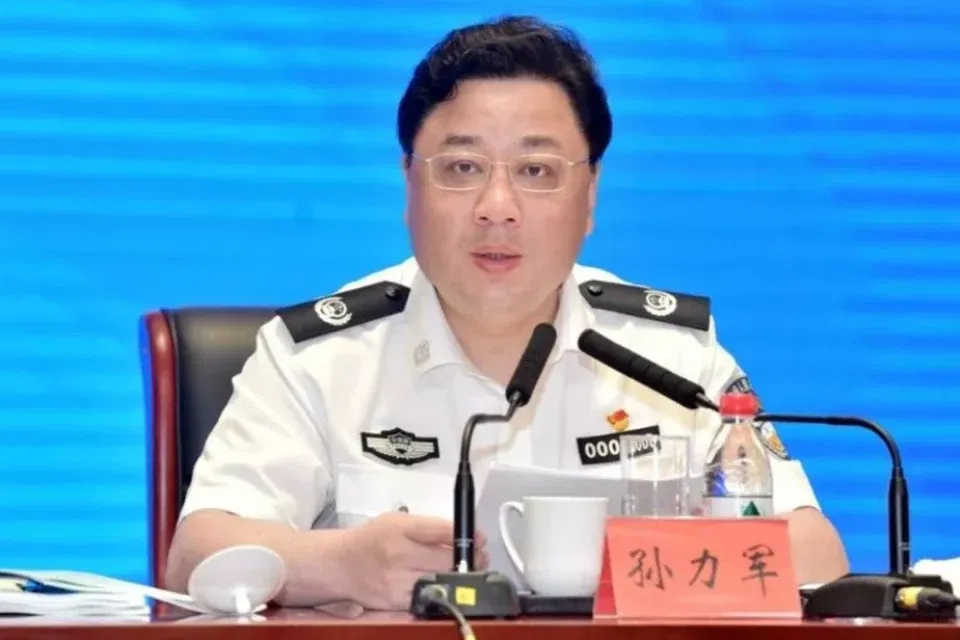
After the FBI began investigating in 2015, Low operated from Hong Kong and Macau, with periodic stretches on his yacht off Thailand. During this time he cultivated a relationship with Sun Lijun, then director of the First Bureau of China's Ministry of Public Security — the bureau that handles domestic political security and intelligence operations.
Sun was not a mid-level handler. He had been personal secretary to the minister of public security, was building a clique of loyal officials across China's security apparatus, and had set himself a fifteen-year plan to become the most powerful security official in the country. He was hungry, ambitious, and willing to take on a foreigner's problem if it proved his value to his superiors. Low offered something no one else could deliver: Malaysia.
The 1MDB fraud had blown a multi-billion dollar hole in Malaysia's finances that Prime Minister Najib Razak was denying up and down. Meanwhile, China was keen to expand its power and influence in Southeast Asia and make extortionate amounts of money on infrastructure projects paid for by the Malaysian government. Low was the broker. He single-handedly negotiated what amounted to one of the greatest mortgages of sovereignty in the modern age.
The arrangement: Najib would stop pushing back against Chinese incursions into Malaysian waters and sign multi-billion, largely unnecessary infrastructure projects at inflated prices. In exchange, the Chinese counter-parties would arrange for funds to flow back to Najib — not only to cover up 1MDB but to prop up his re-election campaign.
Within months, Najib signed $34 billion in rail, pipeline, and other deals with Chinese state companies. The centerpiece was the East Coast Rail Link, budgeted at $16 billion when Malaysian consultants said it should cost $7.25 billion. When a new government renegotiated the contract in 2019, they cut the price by $5.2 billion — proving the original was inflated by design. The Sabah Pipeline Project never materialized at all: at least $2–3 billion from a China EXIM Bank loan was disbursed despite only 13 percent of the work being completed. Total additional losses to Malaysia from the China deals: approximately $6 billion.
That was the price of Low's protection. He went from a fugitive to a strategic intelligence asset — a man who had delivered an entire country's foreign policy to Beijing. Through Sun, the operation acquired a second agenda. It was no longer only about killing the U.S. forfeiture case; Beijing wanted Guo Wengui sent back, and the wishes of two governments merged into a single lobbying campaign.
In May 2017, Chinese officials visited Guo at his apartment in New York and demanded he return to China. The FBI confronted them at Penn Station for violating the terms of their visas. The State Department pressured the FBI not to arrest the officials to avoid a diplomatic incident. But the encounter tipped off American investigators to the scale of the operation — and from that point forward, the FBI was watching.
Sun's own fate arrived from a different direction. Xi Jinping purged him in April 2020. A Chinese court sentenced him to death with a two-year reprieve in September 2022 for taking bribes exceeding 646 million yuan, market manipulation, and illegal possession of firearms. He was featured as the lead case in the CCP's "Zero Tolerance" anti-corruption documentary — a public execution of reputation, if not yet of body.
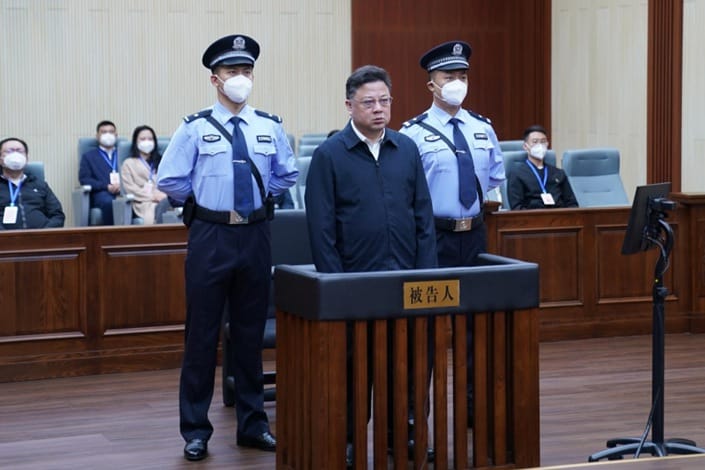
At that moment, Low went from asset to liability. He wasn't useful in the same way anymore, but his arrest would be a risk to China's reputation, because who knows what he learned over the years working with the intelligence apparatus.Low remains in Shanghai today. He has lived at times in a mansion in Green Hills, an ultra-high-end neighborhood, and travels fifteen minutes to an office at the Shanghai Financial Center.
He has at times used a forged Australian passport bearing the Greek name Constantinos Achilles Veis. He is still working — as a behind-the-scenes strategist for the Chinese government, helping sanctioned Chinese companies work around restrictions worldwide. His key advisor, Robin Rathmell, filed a FARA registration to assist a sanctioned Chinese company, XH Smart Tech China Co. Ltd., paid by an anonymous Hong Kong entity.
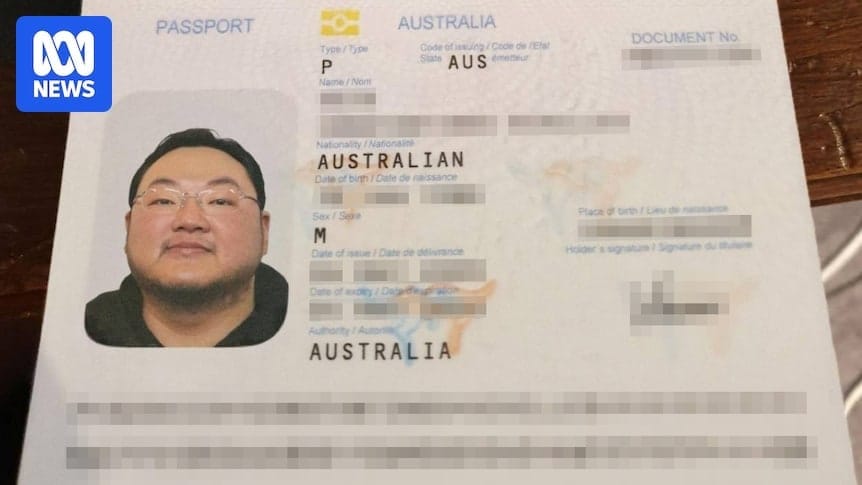
By 2016, the photograph wasn't enough. The Justice Department had filed sweeping forfeiture cases targeting the assets Low had stolen from 1MDB. Access bought from one administration couldn't protect him from the prosecutors and FBI agents of the next.
So Low did what Low always did. He went looking for someone to sell him a way out.Over the next eighteen months, approximately $100 million flowed from Low's accounts through a Chinese shell company into the United States. The money had two objectives: kill the DOJ investigation, and secure the deportation of Chinese dissident Guo Wengui — a quid pro quo with Sun Lijun and his intelligence masters, who were protecting Low from global arrest warrants in exchange for his continued usefulness.
If the scheme succeeded, Elliott Broidy alone stood to earn $75 million. Pras Michel remained the hub of the operation. Of the $100 million, he received approximately $80 million. He brought in Nickie Lum Davis, a businesswoman he knew as a one-time hip-hop hanger-on.
Influence was something close to a family trade for Davis. Her parents, Nora and Eugene Lam, were political fixers. Nora was known to make calls from the governor's waiting room in what The New Yorker described as a "portentous whisper." They pleaded guilty in 1997 to felony conspiracy for funnelling $50,000 in illegal foreign contributions into the 1994 election through straw donors. The records were supposedly destroyed when a car drove through the spare bedroom where they were stored.
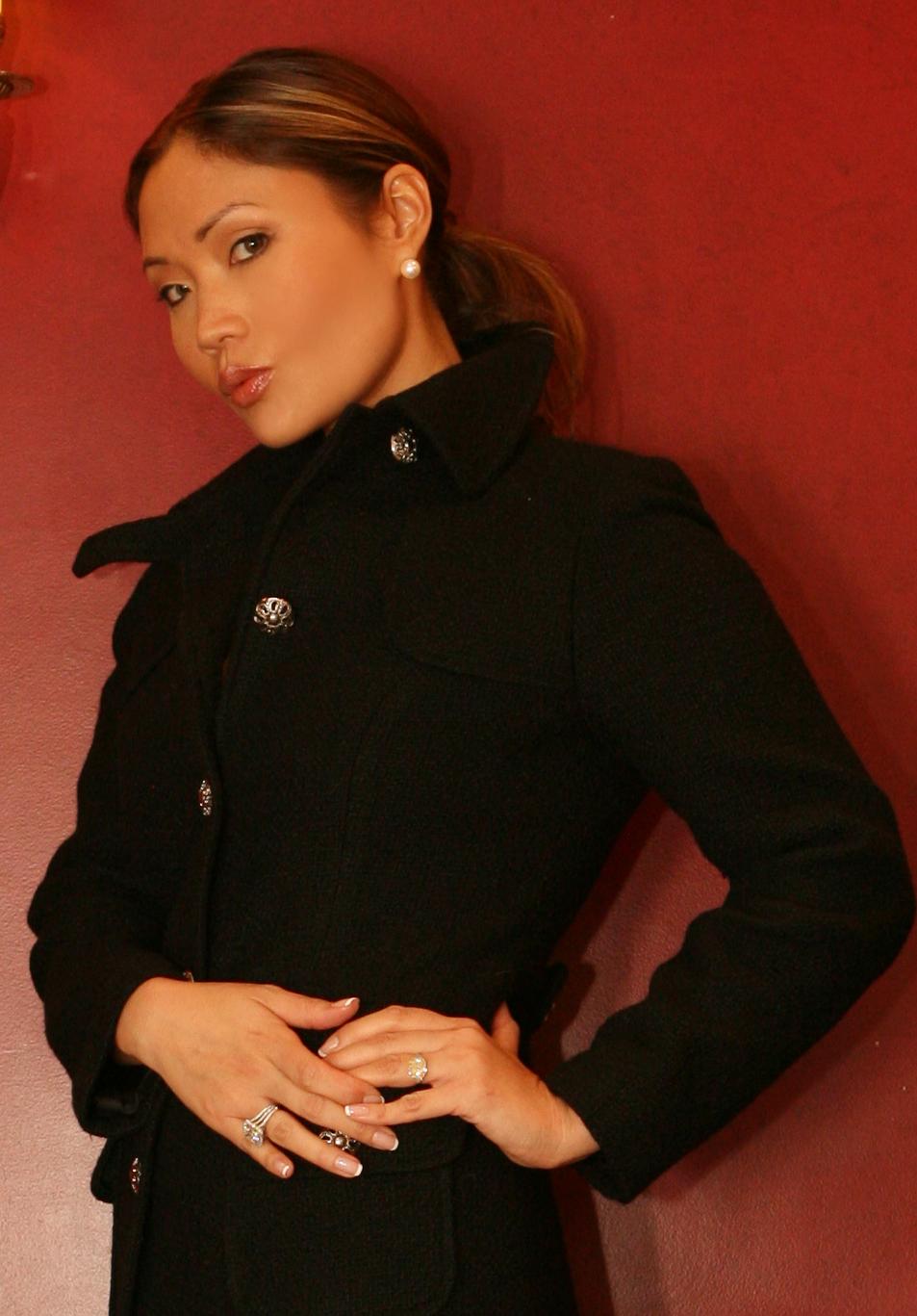
Davis was paid $3 million for her part in Low's operation, and she brought in the man with a direct line to the new administration: Elliott Broidy, a top Republican fundraiser who served as deputy finance chairman of the Republican National Committee — Trump's own party fundraising apparatus. This was not his first corruption scheme. In 2009, he had pleaded guilty in New York to making nearly $1 million in gifts to state pension fund officials in exchange for his firm receiving $250 million in pension funds to manage.
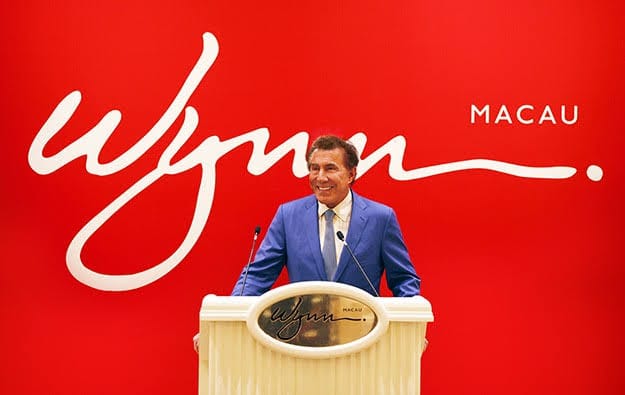
Now he was paid $9 million by Low to lobby the Trump administration and the Justice Department to drop the 1MDB investigation. He tried to arrange a golf game between Trump and Malaysia's prime minister in September 2017 to raise the matter directly. He opened the way to Steve Wynn, a casino magnate whose Macau properties accounted for more than 60 percent of his company's net revenues, a man with billions riding on the goodwill of the Chinese government, and his own direct access to the president.
Low also retained Chris Christie and Marc Kasowitz, Donald Trump's longtime personal lawyer — as legitimate, separate legal counsel, part of a team that negotiated a roughly $1 billion asset settlement in 2019. The DOJ later investigated whether Low used laundered funds funnelled through associates to pay his legal team, but neither Christie nor Kasowitz was ever charged.
(Christie would never admit this out loud, but a good portion of his net worth (if not most of it) came from his multi-million dollar payout for handling backchannel negotiations with the Justice Department on behalf of Jho Low.)
The lawbreaking happened on the influence side. The most dangerous recruit was George Higginbotham, who was then a Senior Congressional Affairs Specialist at the Justice Department. In March 2017, Michel approached his old associate to find someone with political influence who could resolve Low's issues.
Higginbotham prepared the fake retainer and consulting agreements that created pass-through entities to hide payments from Low to Broidy — documents designed so that Low would pay Broidy tens of millions of dollars to lobby United States government officials to drop all civil and criminal matters related to 1MDB. He drafted false loan documents and investment contracts to deceive banks when they asked about tens of millions in suspicious transfers. When one financial institution sent inquiries about the source of the money in Michel's account, Higginbotham sent a detailed written response claiming the funds were for "entertainment matters" and attached a fabricated consulting contract. The bank closed Michel's accounts on September 28, 2017.
On July 16, 2017, Higginbotham walked into the Chinese embassy in Washington and met with China's ambassador. He told the ambassador he was meeting "in his personal capacity and not as a representative of the DOJ" and that the United States government was "working on returning Wengui to China." This is the kind of thing Low cooked up: a sitting Justice Department lawyer, freelancing as a messenger for Chinese intelligence, inside the Chinese embassy in Washington, D.C. It's more like the amateur antics in Burn After Reading than the espionage games of Tinker, Tailor, Soldier, Spy, but dangerous nonetheless.
In September 2017, Higginbotham flew with Michel to Macau to meet Low. Over several days, they discussed strategies for secretly funnelling more of Low's money into the United States to further the lobbying campaign. Low proposed giving Higginbotham power of attorney over the assets of a company formed in China — compensation if Guo was successfully returned. Higginbotham agreed and signed the documents. On October 23, 2017, approximately $41 million was deposited into Higginbotham's personal escrow account at Low's direction.
He disbursed several million for what he told the bank was Michel's "music and entertainment project." When that bank asked about the $41 million deposit, Higginbotham lied again.He submitted two invoices totaling $70,000 for his work in the scheme. He pleaded guilty in November 2018 to one count of conspiracy to make false statements to banks.
His cooperation was substantial — he testified before the grand jury and at length at Michel's trial. He was sentenced to three months' probation and 25 hours of community service. He was disbarred in New York in April 2025, the court finding that he had "abused his status as a DOJ attorney and his privilege of being a member of the bar to entangle himself in the conspiracy to avoid prosecution and forfeiture in one of the largest kleptocracy schemes in history."
In May 2017, at a meeting in Bangkok, Sun berated the American operatives for moving too slowly, and the pressure ran downhill from Beijing through the team toward the White House.
Broidy started pushing the case as a foreign-policy win. He called Trump from Wynn's yacht to talk about Guo, according to court documents.
Then Wynn carried a document into the room like a ticking time bomb. This letter cost tens of millions, maybe 100s of millions of dollars and it had finally defeated every obstacle between Chinese intelligence, Jho Low and President Trump. At a dinner with Trump in June 2017, Wynn made the case to Trump for why Xi felt so strongly about Guo's return and handed him a packet of documents — including an Interpol red notice that could only have come from the Chinese government.
In the Oval Office afterward, flanked by top advisers and Vice President Pence, Trump referred to Guo as a "Chinese criminal" and said: "We need to get this criminal out of the country."
But Matthew Pottinger, then the National Security Council's senior director for Asia, quietly shut it down, telling Trump that this was a Justice Department matter, not an executive one. Aides also reminded the president that Guo was a member of his own Mar-a-Lago club. The multi-million dollar campaign was only inches away from working but saved by a single idealist.
The reason to retell this history now is that the machine is running again. As we reported in our last edition, Low's Washington law firm, Rathmell Short LLP, is staffed by his former lawyer Robin Rathmell, who now appears to be helping engineer his return. The lobbying arm is Stryk Global Diplomacy, led by Robert Stryk and Christian Bourge, former advisers to the 2016 Trump campaign. Through the same channels, the sanctioned Chinese technology company XH Smart Tech became a client, retaining Rathmell Short on a $5.5 million fixed fee routed through a third-party funder, with Stryk Global engaged in support. Stryk Global has separately picked up Russian defence clients, including the Rostec chief executive Sergei Chemezov and Vasily Brovko. Legal 500 still lists Low as a current client of Rathmell Short. A FARA supplement filed this year discloses two meetings with the U.S. Department of State.
On June 29, The Atlantic reported that three sources say Low and Michel are under consideration for a July 4 "250 pardons for 250 years" initiative. Low's filing with the Office of the Pardon Attorney is categorised as "Pardon after Completion of Sentence," a procedural absurdity for a man who has never served time or set foot in a U.S. courtroom.
The going rate for access to pardon intermediaries runs from $1 million to $2 million. One attorney called the situation a "three-ring circus." Another said that in 30 years of practising law he had never seen anything like it. A White House official said the two men were "not on the radar of the pardon team," Michel's lawyer David Tafuri denied any pardon discussions with the U.S. government, and nothing has been formally presented to Trump.
Then, yesterday, CBS News reported that Trump had a meeting scheduled on pardons and had not yet decided whether Michel or Low should receive clemency. Neither was on the pardons team's formal recommendation list, but both were being actively discussed. There's no doubt it's a live discussion up until this very moment.
One thing did settle the same week: in Manhattan, a federal judge sentenced Guo Wengui to 30 years for fraud.
One group is no longer on the job. Soon after taking office, Trump disbanded its Kleptocracy Asset Recovery Initiative, the very unit that helped hunted down $1.4 billion of Low's stolen money.
In the farewell address he published in September 1796, George Washington warned that foreign influence was "one of the most baneful foes of republican government," and that "the jealousy of a free people ought to be constantly awake." The republic he was saying goodbye to turns 250 today.
Trump has explicitly tied the occasion to clemency: his team has discussed issuing 250 pardons to mark the 250th anniversary, and Low’s name is on the list under consideration.
"The jealousy of a free people ought to be constantly awake." – George Washington
In one sense the outcome hardly matters. If Low is pardoned today, the design worked, and the man who built a machine to buy his way out of American justice will have done exactly that, on the anniversary of the warning against it. If he is not, something more disturbing still stands: the attempt was serious enough, and the doors open enough, that the president sat down yesterday to discuss it, and the honest answer was that no one could be sure what he would decide.
Low is still out there, and the case is still open. According to the filings, the architecture he assembled to close it is still doing its work.
The reckoning so far has fallen almost entirely on the people below the top of the pyramid. Nickie Lum Davis was sentenced to two years in January 2023. Pras Michel was convicted on 10 counts in 2023 and sentenced to 14 years in November 2025. He reported to prison at the end of April 2026. His trial left one strange footnote: a closing argument his lawyer built with an experimental AI program that reportedly cited Diddy lyrics incorrectly. His motion for a new trial was denied. George Higginbotham received three months' probation and was disbarred. That was the bill for the influence operation. The original fraud ran up a bill of its own. Tim Leissner, Goldman's former Southeast Asia chairman, reported to prison in February 2026. Roger Ng, Goldman's former Malaysia managing director, is serving 10 years after the Second Circuit upheld his conviction in December 2025. In Malaysia, Najib carries a combined 27-year sentence and remains in prison.
The exceptions are the ones who mattered most. Elliott Broidy pleaded guilty in October 2020 to lobbying the administration on Low's behalf, and within three months the president he had been paid to influence pardoned him, on the final day of his first term. Steve Wynn refused to register under the Foreign Agents Registration Act, and the DOJ lawsuit that tried to compel him was dismissed on appeal in June 2024.
Check out the Brazen Whale Hunting Collection.
Got a question or a tip for us? Get in touch at whalehunting@projectbrazen.com. You can also contact us securely here.
You can also follow Whale Hunting on Instagram, Threads and on X (Twitter). To chat with fellow Whale Hunters and stay in touch with Bradley and Tom, join our Discord server.
For unlimited access to Whale Hunting’s investigative reporting, consider signing up for a paid subscription. You’ll get special editions of the newsletter and the Weekender, as well as premium podcast access and discounted merch.
Enjoying Whale Hunting but not ready to subscribe? Show your support by leaving a tip (via credit/debit card or crypto) instead.
 Related Posts