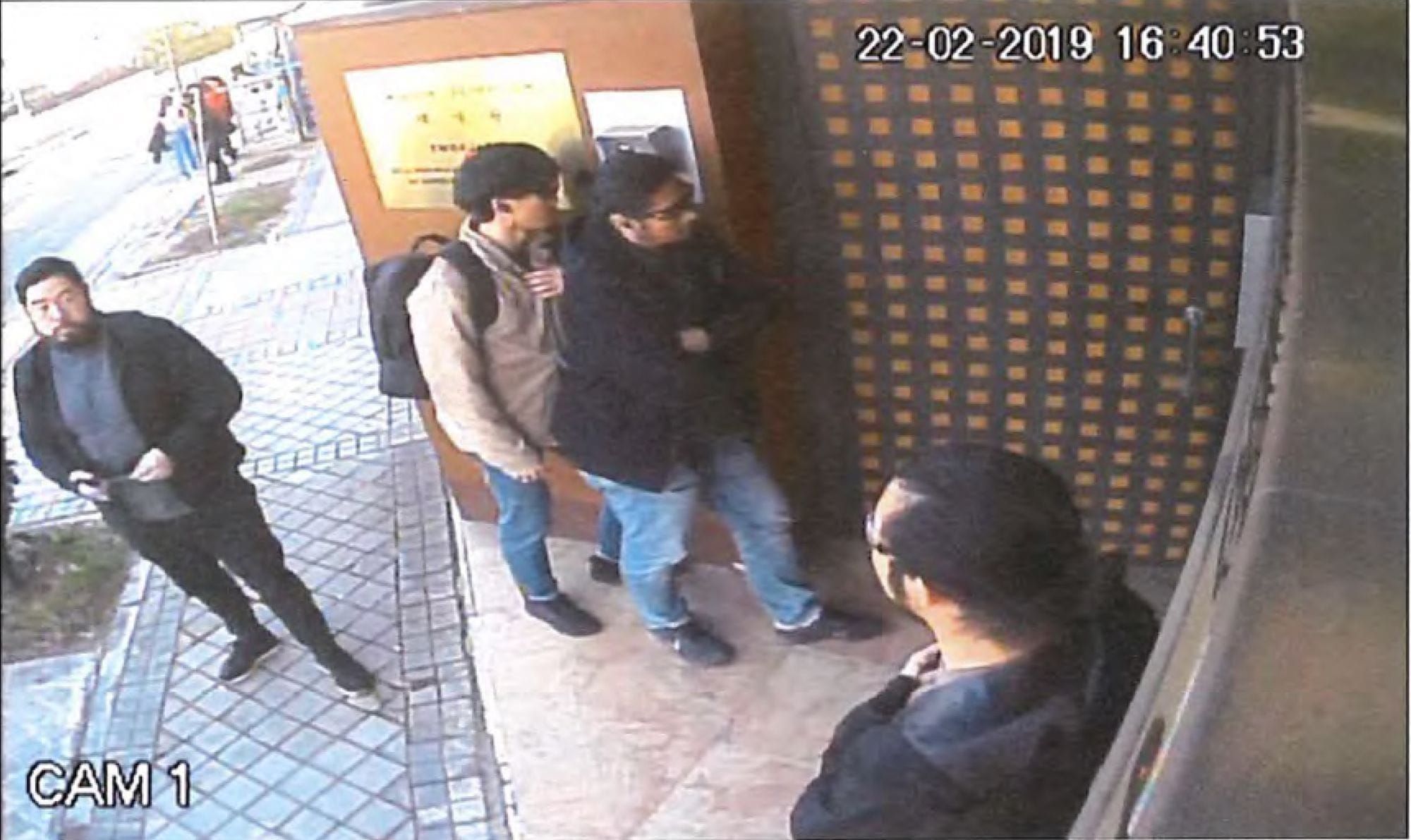
Christopher Ahn’s seven-year legal nightmare may be ending after a federal judge blocked his extradition to Spain and dismantled the case against him.
Welcome to Whale Hunting, where we follow the stories to the very end. I’m Bradley. I started following Christopher Ahn’s story when I was reporting for the Wall Street Journal but it picked up especially when I began working on The Rebel and the Kingdom, my book about the strange, audacious, often heartbreaking world orbiting North Korea's dissidents, defectors, and would-be liberators. I have written about Ahn before in Whale Hunting. Each time, the story felt like it was getting worse. This time it feels different.
Christopher Ahn's seven-year legal nightmare may be ending but now Spain should finish what the court started. Below I'll fill you in on the full story.
Sign up for more.
This story is open to all, and our work is available for free to anyone who signs up with their e-mail. But investigations like this aren’t cheap. If you believe accountability journalism matters, consider upgrading to a paid subscription – or sending a one-time boost. Every contribution directly funds more reporting like this.
Have a tip? Reach us at:
whalehunting@projectbrazen.com
projectbrazen@protonmail.com
Secure contact details here.
We protect our sources.
On March 31, 2026, Judge Fernando L. Aenlle-Rocha of the U.S. District Court for the Central District of California granted Christopher Ahn's habeas petition and
After seven years of house arrest, surveillance, stigma, and the slow grinding down of a man's life, a federal judge examined the legal case for shipping him to Madrid and finally said no.
The ruling found that the extradition failed on probable cause, on dual criminality, on due process under the state-created danger doctrine, and on what the court described as the possible applicability of a humanitarian exception.
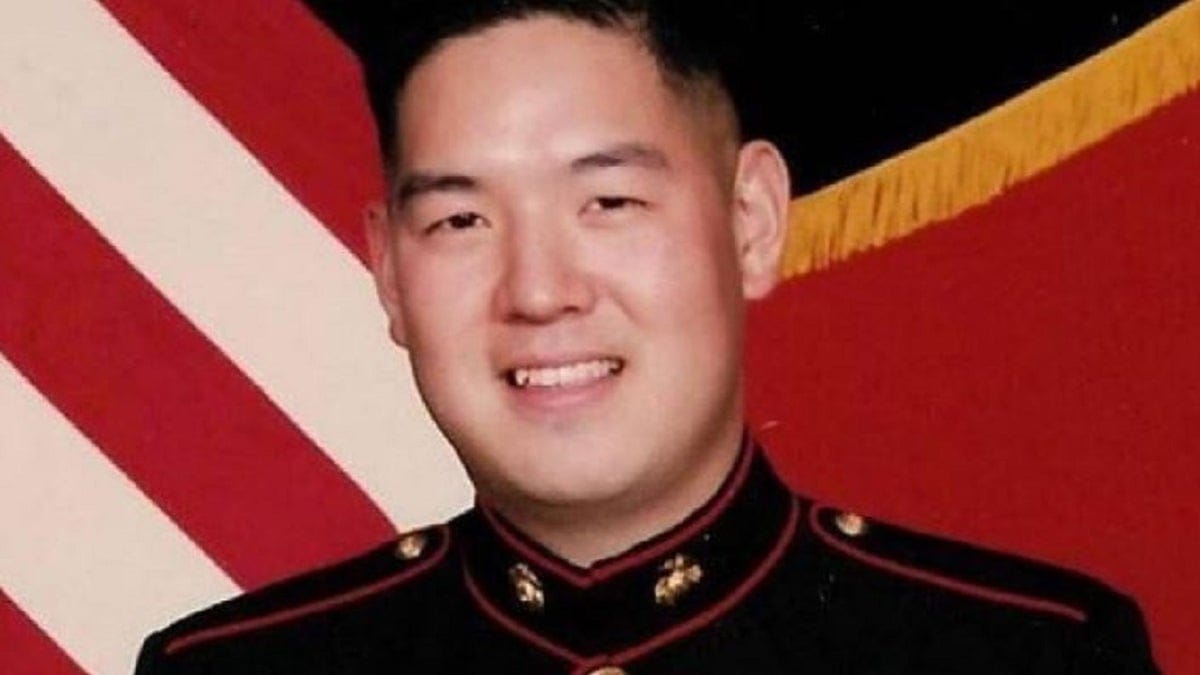
Most readers will be coming to this cold, so here is the short version.
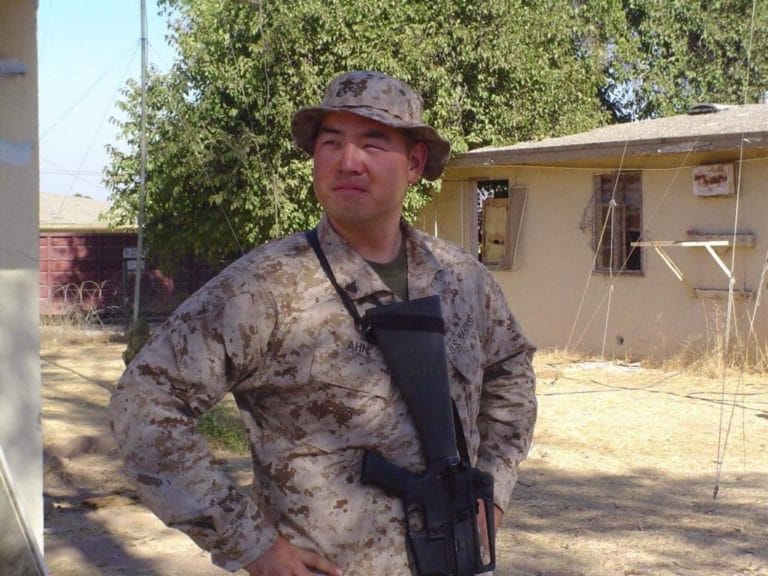
Ahn is a former U.S. Marine with no criminal record and six years of honorable service. A Medal of Honor recipient who knows him called him a "faithful and dutiful Marine." After leaving the military, Ahn volunteered with charitable organizations and drifted into the orbit of Free Joseon, an underground group dedicated to opposing the Kim Jong-un regime in North Korea and helping high-profile defectors escape.
Free Joseon was not a think tank or an NGO with a tasteful website and a board of advisers. It was a clandestine operation run by a man named Adrian Hong, a longtime activist who had grown frustrated with the polite, incremental approach to a regime that starves, tortures, and imprisons millions. Hong believed that helping North Koreans escape, actually doing it rather than writing policy papers about it, was more urgent than containing Kim Jong-un's nuclear program. He built a small network of people willing to act. They weren't former spies or mercenaries – they were bankers, tech geeks and others who felt the call to do something more. And Adrian was the master of persuading people that they had more in them than even they knew.
Ahn was one of those people. He was the operative who flew to help the family of Kim Jong-nam — the dictator's assassinated half-brother — find safety, looking after Kim Han-sol, his mother, and his sister at the Taipei airport before the CIA moved them to a secure location.
In February 2019, members of Free Joseon entered the North Korean embassy in Madrid. The operation was supposed to be a rescue: the embassy's commercial attaché had signaled he wanted to defect, and the group went in to help him and his family get out. It went wrong when a woman escaped the embassy and summoned the police, causing the attaché to cold feet. Free Joseon escaped after a harrowing 48 hours, but they were later identified by Spanish security services.
What happened next was a series of compounding betrayals.
The Free Joseon operatives contacted the FBI immediately after returning to the United States. They tried to explain what had happened and why. Instead of protecting them or clarifying the situation to Spanish authorities, the FBI appears to have simply confirmed their identities to Spain. The U.S. government, apparently unwilling to look like it had been involved in the operation (even though senior officials had known Adrian Hong for years through his defection work), handed Spain the case on a plate.
Spain charged the men with violent crimes: breaking and entering, threats, assault, illegal restraint, even robbery. The indictment treated the embassy operation as if it were a home invasion by strangers with no motive beyond greed. The entire political and moral context was stripped away: North Korea, defectors, the regime's well-documented practice of punishing three generations of so-called traitors. What remained was a criminal file that could have described a burglary crew hitting a house in Málaga. It was actually just a movie set – even the guns were just props.
Of the men charged, only Christopher was arrested because of bad luck. Adrian and another colleague went underground, but He spent months in a federal prison in Los Angeles, followed by years of ultra-strict house arrest with an ankle monitor, a frozen life, a family under strain, and legal bills that never stopped mounting. All of it was imposed by a democratic legal system that preferred not to acknowledge why any of this had happened.
The extradition fight was ugly from the start.
In May 2022, Magistrate Judge Jean Rosenbluth narrowly certified Ahn as extraditable. But her opinion was extraordinary — not for what it decided, but for what it said about its own decision. Rosenbluth practically begged a higher court to stop what she felt compelled to authorize. She wrote that she believed extraditing Ahn would be "antipathetic" to a common "sense of decency." She called him a man whose crimes, if crimes they were, were "almost certainly motivated by altruism." She quoted Thomas Jefferson on the danger of becoming an "accomplice" to mistreatment by delivering a person to a country where he would be in danger. She said she regretted that she was "too weak, in power if not in will, to save him."
Those are not normal words from a federal magistrate certifying an extradition. They were an act of near-rebellion within the constraints of the law. I wrote about that ruling in Whale Hunting at the time, and called it one of the most high-profile cases based on a total misunderstanding I had ever seen. Nothing that happened afterward changed my mind.
Ahn's legal team filed a habeas corpus petition, and what followed was more years of briefing, hearings, and waiting. The court held a hearing in January 2024, and then the public docket went silent until, nearly two years later, the ruling landed.
What Judge Aenlle-Rocha actually held is worth understanding, because it is not a technicality.
The first ground was probable cause. The court found that the magistrate judge had relied on statements from the North Korean commercial attaché's wife, Cho Sun Hi, that were not competent evidence. The statements came through suspect translation, under conditions of extraordinary coercion. Any suggestion of cooperation with defectors would have endangered her entire family under the regime's practice of collective punishment. Some of the statements were, in the court's assessment, plainly unreliable. Once those were excluded and Ahn's own explanatory declaration was properly considered, the remaining evidence did not support the criminal charges Spain had filed.
The second ground was dual criminality. The government could not show that Spain's charges would amount to crimes under U.S. law given the specific circumstances. The court stressed that the United States and North Korea have no peace treaty, no diplomatic relations, and a long history of hostility; that North Korea is a designated state sponsor of terrorism; and that Congress and the State Department have repeatedly recognized the legitimacy of helping North Korean defectors. Ordinary assault and trespass statutes do not apply cleanly onto an operation directed at the property of a hostile regime under these facts.
The due process holding was the most pointed. The judge found that the U.S. government had warned Ahn that North Korea wanted to kidnap, torture, or kill him and told him not to leave the country for his own safety, then turned around and pursued an extradition that would do exactly what it had warned him against. The Constitution, the court held, does not permit the government to increase a person's exposure to a danger it had itself acknowledged and partly created.
The fourth holding concerned the humanitarian exception. The judge embraced the very doctrine Magistrate Judge Rosenbluth had invoked but said she lacked the authority to apply. The district court picked up where she left off and said this was the kind of case where that exception must matter, if it means anything at all.
The ruling is deliberately layered. If an appeals court rejects the humanitarian exception, the probable cause holding still stands. If the due process analysis is narrowed, the dual criminality finding survives on its own. The judge knew he was writing in contested territory, and he gave himself fallbacks. That is not weakness. It is an opinion built to last.
The bitter irony at the heart of this case was always the same, and the ruling does not dissolve it. It sharpens it.
People who tried, however imperfectly, to confront one of the world's most grotesque tyrannies wound up having their own lives broken by democratic institutions that treated them as garden-variety criminals. States that speak nobly about freedom and human rights proved far less comfortable with the actual human beings who got close enough to Pyongyang's machinery to act.
You can argue the judgment of what happened in Madrid. You can call the operation reckless, naïve, brave, misguided, or all four at once. What you cannot honestly do is pretend the story makes sense once you strip out the regime it was aimed at.
North Korea is not Belgium. An operation connected to resistance against the Kim regime is not morally interchangeable with a smash-and-grab. The court said so. It should not have taken this long for someone in a position of authority to say it.
The ruling does not end the saga entirely. The 35-day stay means the government can still appeal to the Ninth Circuit. Spain's criminal case has not been withdrawn. Adrian Hong and the other men charged in connection with the Madrid operation remain exposed and in hiding.
Spain should drop the charges. They should do so not as a favor and or diplomatic concession, but as a recognition that the case was built on a misunderstanding, compounded by coerced testimony, political convenience, and a refusal to acknowledge the moral reality of what these men were trying to do. The commercial attaché who was supposed to be rescued testified that they tried to kidnap him. Of course he did. The alternative was admitting he had been planning to defect from a regime that punishes traitors across three generations of family. He has since been sent home and it's unclear what became of him and his family.
Spain chose to take that testimony at face value. The United States chose not to intervene. Christopher as well as Adrian and the others paid for both decisions with years of their lives.
Brazen produced a video about the book and the Free Joseon saga that is worth watching if you want the full picture. The case has never stopped being one of the most extraordinary I have encountered, a collision between the world's worst regime and the legal systems of democracies that should have known better.
If you want to support Christopher Ahn and his family, you can do so at freechrisahn.com.
Brazen on Adrian Hong, Christopher Ahn, and the underground war with North Korea.
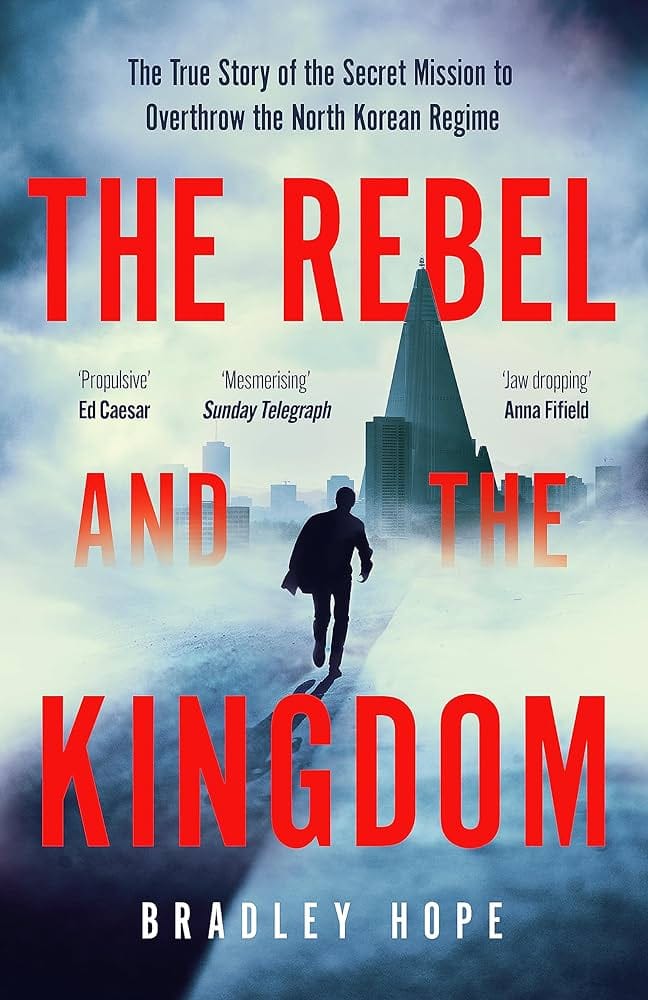
For the deeper backstory behind Adrian Hong, Christopher Ahn, and the hidden campaign against Pyongyang, The Rebel and the Kingdom is the book.
Got a question or a tip for us? Get in touch at whalehunting@projectbrazen.com. You can also contact us securely here.
You can also follow Whale Hunting on Instagram, Threads and on X (Twitter). To chat with fellow Whale Hunters and stay in touch with Bradley and Tom, join our Discord server.
For unlimited access to Whale Hunting’s investigative reporting, consider signing up for a paid subscription. You’ll get special editions of the newsletter and the Weekender, as well as premium podcast access and discounted merch.
Enjoying Whale Hunting but not ready to subscribe? Show your support by leaving a tip (via credit/debit card or crypto) instead.
